How to Start a Trailer Rental Business (2026 Guide)
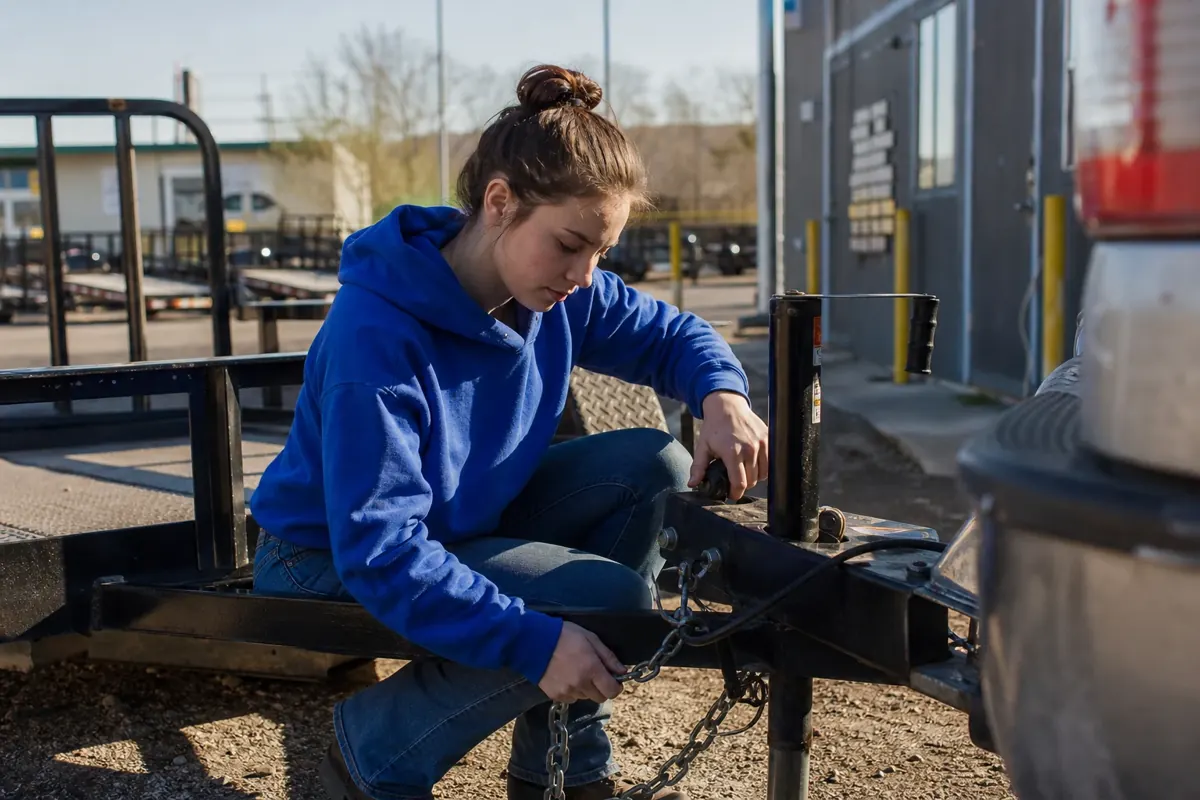
Starting a trailer rental business means buying a small fleet of trailers and renting them to movers, contractors, and landscapers, usually by the day, weekend, or week. Demand is steady and local.
It rides on a large industry. The U.S. equipment rental market, which includes trailer rental, is forecast to reach $81.2 billion in 2025, up 4.2%, according to the American Rental Association.
Plan for startup costs, DMV titling, three insurance policies, tiered pricing, and payment at pickup. With Tap to Pay at 1.99% per sale, you collect the balance the moment a customer hooks up, straight to your JIM Card.
What do you need to start a trailer rental business?
You need 2 to 3 trailers, a secured lot, insurance, and business registration. Plan for $10,000 to $40,000 to launch a small fleet.
Validate demand first. Check local construction permits and talk to movers and landscapers to learn which trailers they need most. A short business plan turns those notes into a target you can fund.
Here is a realistic budget:
<rich-text-table>
| Item | Estimated cost |
|---|---|
| Utility trailer (6x12) | $3,000 to $5,000 |
| Dump trailer (14 ft) | $9,000 to $15,000 |
| Insurance (first year) | $2,000 to $6,000 |
| Business registration and licenses | $150 to $800 |
| Accessories and payment setup | $500 to $1,000 |
| Starting fleet of 2 to 3 trailers, all in | $10,000 to $40,000 |
To fund it, equipment financing uses the trailers as collateral, with rates that depend on your credit and the lender. An SBA 7(a) loan can cover startup and working capital up to $5 million, as of 2026. Keep $5,000 to $10,000 in reserve for the first six months, including a repair fund.
How do you set up the business legally?
Form an LLC, get an EIN, and register each trailer with your state. The trailer registration step is the one most new owners miss.
An LLC protects your personal assets and files for $50 to $300 in most states. Get a free EIN from the IRS, then a local business license from your city or county clerk; license fees vary widely by municipality.
Here is what many overlook: each trailer needs its own title and registration through your state DMV, separate from your business license. Treat every trailer as an individual vehicle.
When you buy, confirm each trailer meets federal safety standards. The NHTSA warns that noncompliant trailers are increasingly sold to small businesses, and an illegal unit can cost you later.
If you rent across state lines or run a tow vehicle and trailer with a combined weight over 10,001 pounds, you likely need a USDOT number. The Federal Motor Carrier Safety Administration requires a USDOT number for commercial vehicles in interstate commerce at that threshold, and some states require one for intrastate work too.
What trailers should you buy to start?
Start with 2 to 3 high-demand trailers, usually a mix of utility and dump models. These cover the widest range of local jobs.
A 6x12 utility trailer runs $3,000 to $5,000 and serves movers and homeowners. A 14-foot dump trailer costs $9,000 to $15,000 but commands higher rates and steady demand from construction and landscaping crews, which is why dump trailers are one of the most profitable niches to enter.
Buying used lowers startup costs, but inspect each trailer for frame damage and worn axles. Budget $500 to $1,000 for accessories like heavy-duty straps, hitch locks, and your payment setup.
Enclosed and car hauler trailers round out a fleet as you grow. An enclosed trailer protects cargo from weather and appeals to movers with fragile loads, while a car hauler serves customers transporting vehicles. Both cost more up front than a utility trailer but command premium weekly rates.
What insurance does a trailer rental business need?
You need three policies: general liability, commercial auto, and inland marine. Budget $2,000 to $6,000 a year for a small fleet.
General liability covers injury claims, commercial auto covers your trailers on the road, and inland marine covers the trailers themselves against theft or damage. Insure them for full replacement cost, not depreciated value.
An agent who specializes in commercial equipment rental understands risks a general agent misses, like a customer towing with an improperly rated vehicle.
Your rental agreement is your other layer of protection. Spell out the customer's responsibility for damage, theft, and misuse, and have a lawyer confirm it holds up in your state.
How much should you charge, and is it profitable?
Trailer rental is profitable when you price in tiers and keep trailers busy. Most owners target a 40% to 50% gross margin.
Suppose a 14-foot dump trailer costs $12,000. Finance it over 60 months. Add insurance, maintenance, and lot costs, and your total monthly cost runs about $1,000. Rent it 20 days a month at $100 a day for $2,000 in revenue, and you keep roughly $1,000, a margin near 50%. Run your own numbers with your real costs and financing rate.
Tiered pricing rewards longer rentals. Typical ranges:
<rich-text-table>
| Rental period | Utility trailer | Dump trailer |
|---|---|---|
| Daily | ~$50 | ~$80 to $150 |
| Weekend | ~$125 | ~$200 or more |
| Weekly | ~$250 | ~$400 or more |
Know your cost per unit before you set rates. If a trailer costs you $100 a month in loan payments and insurance, you need at least $200 in rental income to hit a 40% to 50% margin. Utilization is the real driver. A trailer rented most days of the month reaches break-even far faster than one that sits half the month, so track utilization per unit before you set expansion targets.
You collect full payment and the security deposit when the customer picks up. With Tap to Pay, they tap a card, Apple Pay, Google Pay, or Samsung Pay on your phone, and the money lands on your JIM Card in seconds.
How do you find customers?
Start with a Google Business Profile, then add referral partners and low-cost listings. Local search is where most trailer customers begin.
Claim a free Google Business Profile, fill in every section, and upload clear photos with your rates. Add a simple one-page website targeting "utility trailer rental in [your city]," with your services, daily rates, and a phone number above the fold.
Referral partnerships bring qualified leads. Offer a 10% fee to moving companies, hardware stores, and contractors who send you clients. List trailers on Facebook Marketplace and Craigslist too, which keeps your customer acquisition cost under $50.
Ask every customer how they found you, so you know which channel earns its cost. A short Google Business Profile description like "Daily and weekly utility and dump trailer rentals in [your city]. Insured, secured lot, instant card payment at pickup." gives searchers the facts they need to call.
Common mistakes new trailer rental owners make
Three errors sink new operators: underinsuring, skipping DMV titling, and weak rental agreements.
Underinsuring leaves you exposed when a customer damages a trailer or causes an accident. Insure every trailer for full replacement cost and carry commercial auto, not just a personal policy. Skipping DMV titling means you cannot legally rent a trailer you do not properly register, and an unregistered unit can be impounded. A weak rental agreement shifts loss onto you; spell out who pays for damage, theft, late returns, and improper towing, and have a lawyer review it.
How do you get paid?
Take full payment upfront plus a refundable security deposit, usually $100 to $250, before a trailer leaves your lot.
If a customer books ahead, send a Payment Link to collect the deposit online at 4.99% + $0.30 per sale, then take the balance at pickup. At pickup, Tap to Pay charges 1.99% per sale, with no monthly fee and no hidden costs. Your phone is the card reader, so there is no terminal to buy.
Instant funds keep your repair budget ready. On a $200 rental, the 1.99% fee is about $3.98, so you keep roughly $196, on your JIM Card in seconds.
The JIM Card is issued by Lead Bank, Member FDIC, pursuant to license from Visa U.S.A. Inc. Instant settlements subject to terms. Fees and conditions apply. See jim.com for more details.
When do you scale?
Scale on data, not guesswork. Once a trailer's utilization tops 75% for two months, add another unit of the same type. Hire a part-time yard associate when you pass about 10 rentals a week, and open a second secured lot only after the first runs at capacity for a full season.
Turn your phone into a card reader and start accepting payments with Tap to Pay. You are ready before your first customer hooks up.
Frequently Asked Questions
How much does it cost to start a trailer rental business?
Is a trailer rental business profitable?
How much is insurance for a trailer rental business?
Do you need a license to rent trailers?
How do you start a dump trailer rental business?
Can you start a trailer rental business from home?



Sell and get paid in seconds with Jim