How to start an e-bike rental business: A founder's guide
See article summary
- A 10-bike e-bike fleet costs $15,000 to $30,000 to launch before rent and insurance.
- Form an LLC, get a free IRS EIN, and confirm your local vehicle rental permit.
- Carry $1 million per occurrence general liability plus Inland Marine fleet coverage.
- Check e-bike class laws in your area, since Class 2 and 3 face trail restrictions.
- Target 60% to 75% gross margin and scale when weekend utilization passes 70%.
A 10-bike e-bike fleet runs $15,000 to $30,000 before you unlock the door, and most founders reach positive cash flow inside the first tourist season when utilization stays above 40% on weekends. Demand comes from three steady channels: tourists who want a guided route, daily commuters who skip the hills, and recreational riders out for a half-day loop.
The work splits into ten decisions: validate demand, set up a legal entity, secure insurance, pick a location, choose payment processing, line up funding, hire a team, market to riders, price for margin, and maintain quality. Each one has a specific dollar range and a documented step that separates a profitable shop from a stranded fleet.
How do you validate an e-bike rental idea?
Demand validation takes two to three weekends of on-site counts plus five conversations with local hotel and cafe staff. Numbers from the street beat any desktop research, because foot traffic at 10 a.m. on a Saturday tells you whether a location can support a rental counter.
Spend a few days in potential high-traffic areas like tourist districts or popular parks. Count cyclists and pedestrians to gauge demand, and note the peak hours so you know when your service would sell. A location that looks busy on Google Maps can be dead on the ground if the foot traffic passes through without stopping.
Talk to local businesses next. Ask hotel concierges and cafe owners whether customers inquire about bike rentals. Their answers reveal partnership opportunities before you launch, and a single concierge who sends you three rentals a week can cover a bike's monthly cost. City tourism reports add visitor counts and seasonal patterns to what you hear on the street.
Analyze competitors and estimate costs
Identify your competition using Google Maps, then visit the top two in person. Where founders trip up is competing only on price. Study the entire customer experience instead, from the booking process on their website to the condition of their bikes and the tone of their reviews. A gap in their check-in speed or their bike cleanliness is your opening.
Your main initial investment is the fleet. A starter fleet of 10 e-bikes costs $15,000 to $30,000, with each bike running $1,500 to $3,000. Three models suit rental duty well: the Rad Power RadRunner Plus at about $1,400, built for cargo and a second passenger; the Aventon Level at about $1,500, a Class 2 commuter with a throttle; and the Blix Vika+ folding model at about $1,600, compact for storage. Prices shift with model year, so confirm current figures before you buy.
Other startup expenses include annual liability insurance ($1,000 to $2,500), booking software ($50 to $200 monthly), and business licenses ($300 to $800). Budget for helmets and locks, which add $500 to $1,000 to your initial outlay.
Three steps to take now:
- Spend a weekend observing foot and bike traffic in three potential locations.
- Build a spreadsheet listing two local competitors, their prices, and key points from their customer reviews.
- Draft a preliminary budget with estimated costs for a 10-bike fleet, insurance, and software.
How do you set up the legal structure and get licensed?
Form a Limited Liability Company, obtain an Employer Identification Number, and apply for local permits, in that order. The LLC separates your personal assets from business debts, the EIN lets you open a business bank account, and the local license is what legally lets you rent vehicles in your city.
Protect your personal assets first by forming a Limited Liability Company (LLC). This structure separates your business and personal finances. An LLC also offers pass-through taxation, meaning a single-member LLC is treated by default as a disregarded entity and profits are taxed on your personal return, which simplifies your accounting compared with a corporation. Source: IRS guidance on LLC classification.
Once your LLC is registered with your state, get an Employer Identification Number (EIN) from the IRS. You can apply for this nine-digit number online for free, and the application takes minutes. You need it to open a business bank account and hire any future employees. Source: IRS Employer Identification Number.
Local requirements come next. Contact your city or county clerk's office for a general business license, which varies in cost and terms by jurisdiction, so confirm the exact fee and form on your local government website. Many cities also require a specific vehicle rental permit, so ask about that directly to avoid fines. Local governments determine registration, licensing, and permitting requirements, so check your local government website for the rules that apply to you. Source: SBA launch your business.
Processing times vary. An EIN is instant, but local permits can take two to six weeks to be approved. Start this process early so it does not delay your launch.
Understand e-bike class regulations
E-bikes fall into three federal classes, and the class you rent affects where customers can ride. Class 1 provides pedal assistance only up to 20 mph, Class 2 adds a throttle up to 20 mph, and Class 3 assists pedal power up to 28 mph. State and local laws treat these classes differently: some trail systems ban Class 2 and Class 3, and a few states require helmets or set minimum ages for Class 3. Confirm the rules in your operating area before you buy your fleet, because a bike that is illegal on your nearest trail is a bike you cannot rent out. Source: PeopleForBikes e-bike policies and laws.
Three steps to take now:
- File for an LLC with your state's Secretary of State office.
- Apply for a free Employer Identification Number (EIN) on the IRS website.
- Call your city clerk to get a list of all required business licenses and vehicle rental permits.
How much insurance does an e-bike rental need?
General liability with a $1 million per occurrence and $2 million aggregate limit is the standard starting point for a rental operation, paired with an Inland Marine policy that covers the fleet off-premises. The two policies together typically cost $600 to $2,500 a year, depending on your fleet size and location.
General liability insurance is your first line of defense, covering injuries to riders or damage to their property. A $1 million per occurrence and $2 million aggregate limit is the common starting point for small businesses, because it covers the typical slip-and-fall or property damage claim without the premium jump that higher limits carry. Source: NAIC small business insurance guidance.
Insure your fleet next. This is often covered under an Inland Marine policy, not standard property insurance. A specific error we have seen is a policy that excludes theft or damage when the bikes are off-premises, which is exactly when rentals are most exposed. Confirm off-premises theft and damage coverage in writing.
Find a specialized provider
General insurance agents may not understand rental risk. Instead, get quotes from at least three providers that specialize in rental or recreational businesses. Ask whether each carrier offers a dedicated rental policy product, whether the policy covers e-bike theft off-premises, and what the deductible is per claim. Specialized rental insurers publish policy details designed for fleet operators, so compare the coverage language before you compare the price.
If you plan to hire employees, you will also need Workers' Compensation insurance. This is a state requirement and covers employee injuries on the job. The cost varies based on your payroll and state regulations.
Three steps to take now:
- Request quotes for a $1 million per occurrence and $2 million aggregate general liability policy from three specialized providers.
- Ask each insurer whether their Inland Marine policy covers e-bike theft and damage off-premises.
- Check your state's requirements for Workers' Compensation insurance if you plan to hire staff.
How do you choose a location and equipment?
A 300 to 500 square foot commercial space near tourist paths or transit hubs fits a fleet of 10 to 15 bikes. Sign a one to two year lease with a seasonal rent clause, so you can validate foot traffic before you commit and reduce rent during the slow months.
Look for properties zoned for retail or general commercial use, often listed as C-1 or C-2, near tourist paths or public transit hubs. A spot that is a five-minute walk from a hotel cluster outperforms one that is cheaper but isolated.
When you find a spot, negotiate a shorter lease of one to two years. Where founders trip up is locking into a five-year term before they validate the location's foot traffic. Ask for a seasonal rent reduction clause for off-peak months, because revenue swings hard between peak and shoulder seasons.
Gear up your operation
Beyond the bikes, you need safety and maintenance gear. Budget for helmets ($30 to $60 each) and heavy-duty U-locks ($50 to $100 each). A quality floor pump and a basic bike repair stand with tools add $300 to $500 to your setup costs.
For bulk purchases, you might look at distributors like Quality Bicycle Products (QBP). Be aware they often require a physical storefront and have minimum order values, so this is a better option once you establish your business. Initially, local bike shops can be a good source.
Three steps to take now:
- Research commercial zoning codes for two potential neighborhoods on your city's planning department website.
- Draft a lease inquiry email that requests a one-year term and a seasonal rent clause.
- Create a shopping list and price out helmets, locks, and a repair kit for a 10-bike fleet.
How do you set up payment processing?
A rental operation needs a processor that supports pre-authorizations for security deposits and a way to take walk-up payments on the spot. Pre-authorization lets you place a temporary hold on a customer's card for a deposit, usually $100 to $250, without actually charging it.
When you choose a payment solution, look at transaction fees, hardware costs, and how it works with your booking software. Where founders trip up is getting locked into high monthly fees or complex hardware before they know their volume.
Accept payments anywhere
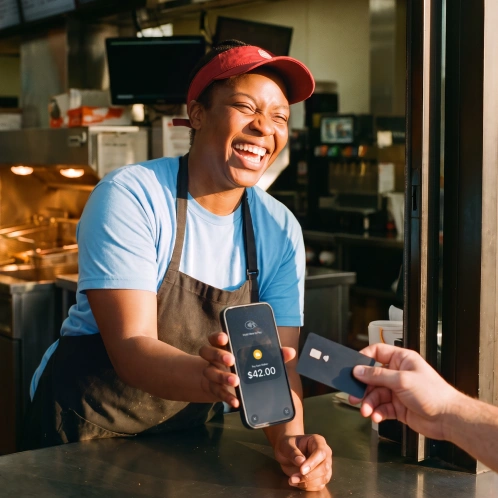
For walk-up rentals or pop-up events, you need to accept payments on the go. A phone-based Tap to Pay solution lets you accept debit, credit, and digital wallets directly through your smartphone, with no separate card reader to buy or carry. That matters for a rental counter that moves between a storefront, a trailhead, and a weekend event.
JIM charges 1.99% per Tap to Pay transaction with no monthly fee and no hardware rental, which compares with the 2.5% to 3.5% plus monthly fees that many traditional processors charge. Funds are available on your JIM Card as soon as the sale completes, so you are not waiting on a bank transfer to restock locks or pay a mechanic. You can learn how to sell using JIM and handle on-the-spot rentals from your phone.
Three steps to take now:
- Research two payment processors that integrate with popular booking software and support pre-authorizations.
- Decide on your security deposit amount and draft your pre-authorization policy.
- Download the JIM app to explore its interface for on-the-go payments.
How do you secure funding and manage finances?
An SBA 7(a) loan covers larger fleets, an SBA Microloan covers up to $50,000 for a starter fleet, and six months of working capital keeps you afloat while bookings build. Lenders want a strong business plan and credit history, and the SBA sets the program terms.
Your business plan is your key to funding. The Small Business Administration (SBA) 7(a) loan is a popular choice for larger amounts, up to $5 million. Lenders evaluate creditworthiness and repayment ability, and most require an equity injection, often 10% to 20%, though the exact down payment depends on the lender, your credit, and the loan size. Source: SBA 7(a) loan program.
SBA Microloans are another option, offering up to $50,000 through intermediary lenders, with the average loan closer to $13,000. These suit smaller fleets. Also, search for local green-initiatives or tourism grants through your city's economic development office. Source: SBA Microloan program.
Calculate your working capital
You need cash on hand for the first six months. Where founders trip up is budgeting only for the bikes. Calculate six months of rent, insurance, booking software fees, and a small marketing budget. This working capital usually falls between $8,000 and $15,000.
A worked profit and loss example
Consider a 10-bike fleet at 40% weekend utilization, which means each bike rents four out of ten weekend days. At $90 for a full-day rental, gross weekend revenue for two bikes rented each day across a four-day weekend window runs to about $720. Add four half-day rentals at $60 and four hourly rentals at $25, and weekly gross reaches roughly $1,120. Across a peak month, that is about $4,480 in gross revenue. Against fleet depreciation, insurance, software, rent, and a part-time associate, a well-run shop lands in the 60% to 75% gross margin band. Numbers shift with your local rates and utilization, so plug your own figures into this frame before you commit.
Four steps to take now:
- Draft a detailed business plan that highlights your market research and financial projections.
- Research SBA 7(a) loan and Microloan requirements on the official SBA website.
- Calculate your estimated working capital for the first six months of operation.
- Search your state and city economic development websites for green transportation grants.
How do you hire a team and run daily operations?
Your first hire is a Rental Associate at $15 to $20 an hour, supported by opening and closing checklists that keep the fleet ride-ready every morning. Payroll should stay under 30% of gross revenue.
For your first hire, you will likely need a Rental Associate. This role covers customer check-ins, safety briefings, and basic bike adjustments. Depending on your market, plan for an hourly wage between $15 and $20.
A formal bike mechanic certification is a plus, but not a requirement for this entry-level position. Make First Aid and CPR certification mandatory, though. This adds a layer of safety and professionalism.
Streamline your daily workflow
Where founders trip up is running the day without a clear process. Create simple opening and closing checklists that include checking tire pressure, confirming battery levels, and cleaning returned bikes to maintain quality.
To manage shifts, look at scheduling software like Homebase or When I Work. These platforms help with payroll and team communication. A good benchmark is to keep payroll costs under 30% of gross revenue.
Four steps to take now:
- Draft a job description for a Rental Associate, including responsibilities and pay.
- Research local First Aid and CPR certification courses for your new hire.
- Create a preliminary daily checklist for opening and closing procedures.
- Compare the features of Homebase and When I Work for employee scheduling.
How do you market an e-bike rental business?
Local partnerships and a complete Google Business Profile drive the first 50 bookings without any paid ads. Keep your Customer Acquisition Cost under $50 and your booking conversion rate between 2% and 4%.
Start with local partnerships. Hotels, visitor centers, and cafes are your best allies. Offer their staff a 10% commission for each referral. This creates a direct sales channel with zero upfront cost and provides an added amenity for their guests.
Master your digital storefront next. Claim and fully optimize your Google Business Profile. Add high-quality photos, your hours, and a direct link to your booking page. This is often the first place potential customers find you online.
Focus on what works
Where founders trip up is spreading their marketing budget too thin. Instead of running ads everywhere, focus on what works. Your Google profile and local partnerships can drive your first 50 bookings without any ad spend. Track where customers come from.
Keep an eye on your Customer Acquisition Cost (CAC). If you spend $100 on flyers and get five bookings, your CAC is $20. Aim for a CAC under $50 for this industry. Also track your website's booking conversion rate; a good target is 2% to 4%.
Use social media to show, not just tell. Post videos on Instagram or TikTok of riders enjoying scenic local routes. Partner with local travel influencers for a day and offer them a free rental in exchange for a post about their experience.
Four steps to take now:
- Draft a partnership proposal email to send to three local hotels.
- Claim and complete your Google Business Profile with photos and a booking link.
- Create a simple spreadsheet to track customer sources and calculate your CAC.
- Post one video of your e-bikes at a local landmark on Instagram.
How do you price e-bike rentals for profit?
A tiered model of hourly, half-day, and full-day rates targets a 60% to 75% gross margin, with dynamic pricing on weekends and holidays to capture peak demand. Add-ons like baskets and child seats lift the average ticket without extra fleet cost.
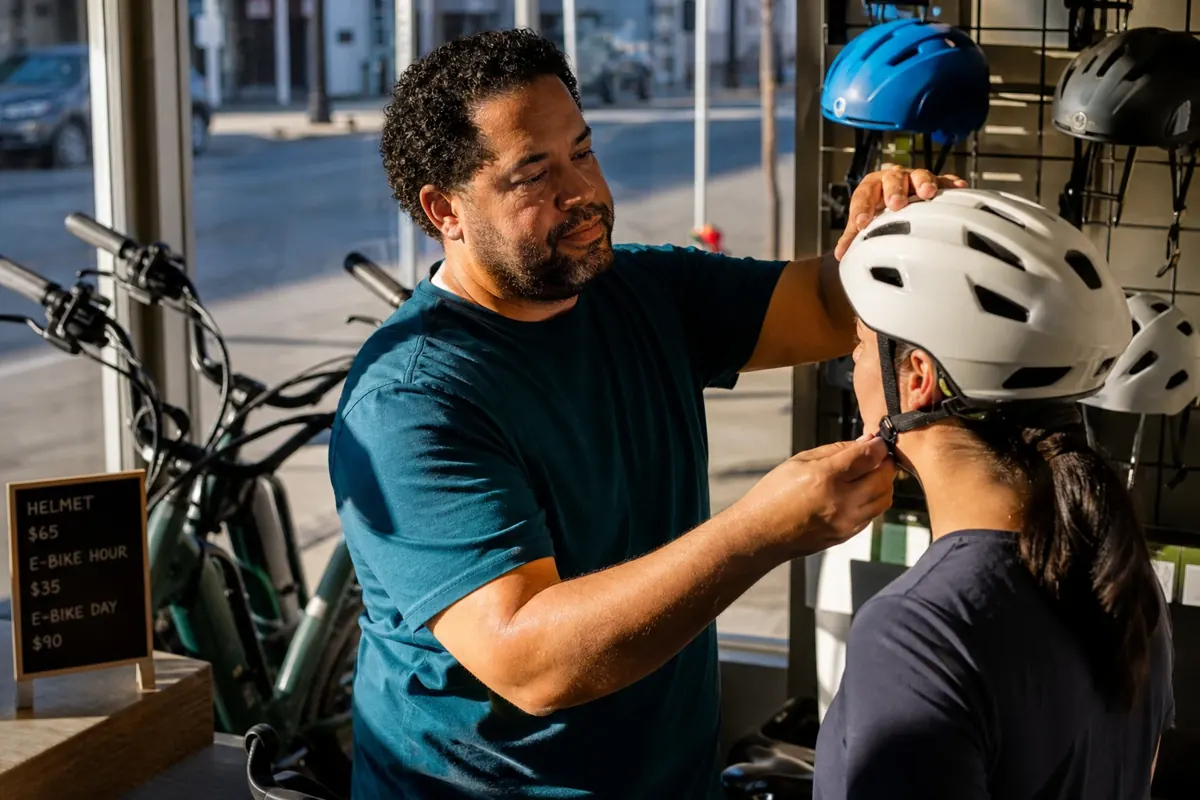
Most e-bike rental businesses use a tiered pricing model. A common structure charges by the hour, half-day (4 hours), and full-day (8 hours). For example, you might set rates at $25 per hour, $60 for a half-day, and $90 for a full day.
Develop your pricing strategy
Before you set your prices, research your competitors. Do not just look at their websites; call them and ask about their process. A specific error we have seen is simply undercutting the competition. Instead, find ways to add value, like including a phone mount, to justify a premium price.
Aim for a gross profit margin between 60% and 75% on each rental. This margin covers your fixed costs like insurance and software. You can also boost revenue with add-ons. Offer items like baskets or child seats for an extra $5 to $15 per rental.
Consider dynamic pricing for weekends and holidays, increasing your rates by 10% to 20% to match higher demand. Multi-day rental packages or guided tour bundles lift your average transaction value.
Four steps to take now:
- Create a pricing sheet with hourly, half-day, and full-day rates.
- Call two local competitors to analyze their pricing and what is included.
- List three add-ons you can offer and decide on their rental price.
- Calculate your weekend pricing based on a 15% increase over your standard rate.
How do you maintain quality and scale the business?
A daily pre-ride inspection, a 95% fleet availability target, and a 4.5-star review floor keep quality high. Scale when weekend utilization stays above 70% for a month or when you spend more than 15 hours a week on check-ins.
Establish a daily pre-ride inspection for every bike. This includes checking tire pressure, brake function, and battery charge. A simple checklist ensures consistency. Skipping these small checks leads to bigger repair bills and unhappy customers down the road.
Track key metrics. Aim for a bike availability rate of 95% or higher during your busy season. Monitor your Google and Yelp reviews weekly. If your average rating drops below 4.5 stars, read the feedback to identify and fix the root cause quickly.
Know when to grow
Growth should be data-driven. When you personally spend more than 15 hours a week on customer check-ins and basic maintenance, it is time to hire your first employee. This frees you up to focus on marketing and strategy.
Watch your fleet utilization rate. If your bikes are booked more than 70% of the time on weekends for a month straight, it is a strong signal to expand your fleet. Adding another 5 to 10 bikes meets the demand.
As you add more bikes or locations, your initial software may not keep up. Platforms like Booqable or FareHarbor handle larger inventories, staff scheduling, and advanced reporting. They help you manage the complexity that comes with a larger operation.
Four steps to take now:
- Create a daily pre-ride inspection checklist for your bikes.
- Set a calendar reminder to review customer ratings on Google and Yelp each week.
- Calculate your current weekend bike utilization rate to see if it exceeds 70%.
- Explore the features of Booqable and FareHarbor to see how they support larger fleets.
Launch week roadmap
The most successful owners know they are in the hospitality business, not just equipment rental. Focus on creating a seamless, fun experience for every rider. Run through this sequence the week you open:
- File your LLC and confirm your EIN is active.
- Confirm your general liability and Inland Marine policies are bound, with off-premises theft coverage in writing.
- Verify your local business license and vehicle rental permit are approved.
- Place your fleet order and confirm the e-bike class is legal on your nearest trail.
- Set up your booking software and your payment processor with pre-authorizations.
- Stock helmets, locks, and a repair kit for 10 bikes.
- Claim your Google Business Profile with photos and a booking link.
- Send partnership emails to three local hotels.
- Post your first ride-route video on Instagram.
When the first walk-up customer arrives, a simple payment process keeps the line moving. JIM turns your smartphone into a card reader for a flat 1.99% fee without extra hardware, so you can take a deposit and a rental payment on the spot. Download JIM and be ready for day one.
Frequently Asked Questions
Is an e-bike rental business profitable?
How much does it cost to start an e-bike rental business?
What licenses do I need to rent e-bikes?
Do I need special insurance for an e-bike rental?
Which US cities are best for an e-bike rental business?



Sell and get paid in seconds with Jim