Debit Card Processing Fees: Costs, Rules & Savings

See article summary
- Debit card processing fees bundle interchange, network assessment, and processor markup; only the markup is negotiable.
- Visa and Mastercard rules prohibit surcharging debit transactions, even when run as signature debit.
- Cut costs legally: review your all-in effective rate, enable PIN debit routing, and batch daily before your processor cutoff.
Yes, your business pays a fee to process every debit card sale, but Visa and Mastercard rules bar you from adding that fee as a surcharge to the customer at checkout.
The processing fee is a merchant cost, built largely on debit card interchange, the rate that federal law limits for large banks under the Durbin Amendment. A surcharge is an extra charge you add to the customer's price, and card network rules keep that step off-limits on debit cards.
The safe move is to manage this cost inside your business, not to pass a debit fee to the buyer.
What Debit Card Processing Fees Actually Cover
The rate on your statement is not one charge. It bundles three separate costs, and only one of them goes to your processor. Reading them apart is how you tell a fair price from an inflated one.
The Three Parts of a Debit Fee
Debit card interchange is the fee your bank pays the cardholder's bank to move the money. A card network assessment fee is the small cut the network takes to route the sale. Processor markup is what your provider adds on top for its service.
| Fee component | What it is | Who keeps it |
|---|---|---|
| Debit card interchange | The largest piece, charged to move funds between banks | The customer's card-issuing bank |
| Card network assessment fee | A small routing charge on each transaction | The card network |
| Processor markup | The margin added for handling the sale | Your payment processor |
Across the industry, traditional processors charge roughly 1.5% to 2.9% to process a debit sale once those three pieces are added together. Treat that as a reference range, not a quote, since only the markup is truly negotiable.
Why Debit and Credit Costs Differ
Federal rules make debit cheaper underneath. Under the Durbin Amendment, banks with more than $10 billion in assets have their interchange capped at 0.05% plus $0.21 per transaction, as set by Federal Reserve Regulation II. Cards from smaller banks skip that cap and cost more, and credit cards carry no cap at all.
A single $100 debit sale from a regulated bank costs roughly $0.26 in interchange. The same sale on a credit card or an exempt small-bank debit card can run two to three times that. Rather than trust one advertised percentage, check all three line items on your statement and find where the real cost sits. The markup is where you have leverage, not the capped interchange.
A lower underlying debit cost still does not let you add that fee to the customer's price at checkout, which is where the rules matter next.
PIN Debit vs Signature Debit
A debit card can clear the network two ways: as PIN debit, where the customer enters a PIN, or as signature debit, where the card runs without a PIN and the customer signs or taps. PIN debit routes through a debit network like NYCE or Star and usually costs less because it carries lower fraud risk. Signature debit routes through the Visa or Mastercard network and typically costs more.
The gap between the two matters because the processor decides which path each sale takes unless your terminal prompts for a PIN. If most of your debit volume runs as signature, ask your processor whether enabling PIN debit on your reader would lower your effective rate.
Durbin Routing Rights
Regulation II also gives merchants the right to route debit transactions over at least two unaffiliated networks. That rule was extended to card-not-present transactions in 2023, so online debit sales must also have two routing options. If your processor locks debit routing to a single network, you may be paying more than necessary. Ask your processor which networks are enabled and whether you can choose the cheaper route.
Is It Illegal to Charge a Debit Card Fee?
Yes, you are barred from charging your customer a fee to pay by debit. Visa and Mastercard prohibit debit surcharges in their merchant rules, and that ban holds even when a debit card runs as signature debit instead of with a PIN. Several states also ban surcharges on top of the network rules.
The underlying cost you read on your statement never becomes permission to raise the price for a debit buyer. The fix is to control your own cost, not to tack a line onto checkout.
What You Cannot Add at Debit Checkout
Sorting the legal moves from the prohibited ones takes only a moment, and it protects you from a network fine or a chargeback dispute.
| Allowed | Prohibited |
|---|---|
| Absorb the processing cost as a normal business expense | Add a percentage surcharge or flat fee to a debit sale |
| Switch to a cheaper processor or pricing model | Surcharge a debit card that runs as signature or "credit" |
| Choose lower-cost card payment machines or contactless acceptance | Charge the debit fee back to the customer under any label |
The signature-debit trap catches many owners. A debit card processed without a PIN still counts as debit, so running it as "credit" does not unlock a legal surcharge.
Debit Purchase Minimums and Cash Discounts
You also cannot set a minimum purchase amount for debit cards. The federal Durbin Amendment, implemented through Federal Reserve Regulation II, lets you set a credit-card minimum of up to $10 but grants no such allowance for debit, and card network rules prohibit a debit minimum. Treat those two card types differently at the counter.
A cash discount is a separate compliance topic, not a rename for a surcharge. If you lower the price for cash payers, disclose it clearly and post the cash price as the base price. Confirm the current network and state requirements before you change any signage or checkout setting, because the details shift by state.
States That Restrict Surcharges
Several states go beyond the network ban and prohibit surcharges by statute. Connecticut, Massachusetts, and Maine each enforce outright bans on credit card surcharges, and Maine's law extends the prohibition to debit cards as well. If you operate in one of those states, the no-surcharge rule is not just a network policy but a state law with its own enforcement path.
| State | What the law does | Source |
|---|---|---|
| Connecticut | Prohibits surcharges on any payment method, including credit and debit | Connecticut Department of Consumer Protection |
| Massachusetts | Bans credit card surcharges under Chapter 140D, Section 28A | Massachusetts General Laws |
| Maine | Prohibits credit and debit card surcharges under Title 9-A, Section 8-509 | Maine Consumer Credit Code |
With the risky shortcuts off the table, the next question is how to cut the actual cost the legal way.
How to Reduce Debit Processing Costs Without Breaking the Rules
Cutting the cost the legal way comes down to three checks. Run them before you shop for a new rate or change how you take payments.
Checklist to cut debit processing costs: review all-in rate, match payment channel to how you sell, and batch daily.
Review the All-In Cost
Add every charge, not just the headline percentage. Monthly fees, statement fees, batch fees, and per-transaction cents all belong in the math. Divide your total monthly processing cost by your total card sales to find your real effective rate.
Match the Payment Method to How You Sell
In-person and remote payments rarely cost the same, so do not assume one rate covers both. Card-not-present sales carry more fraud risk and cost more.
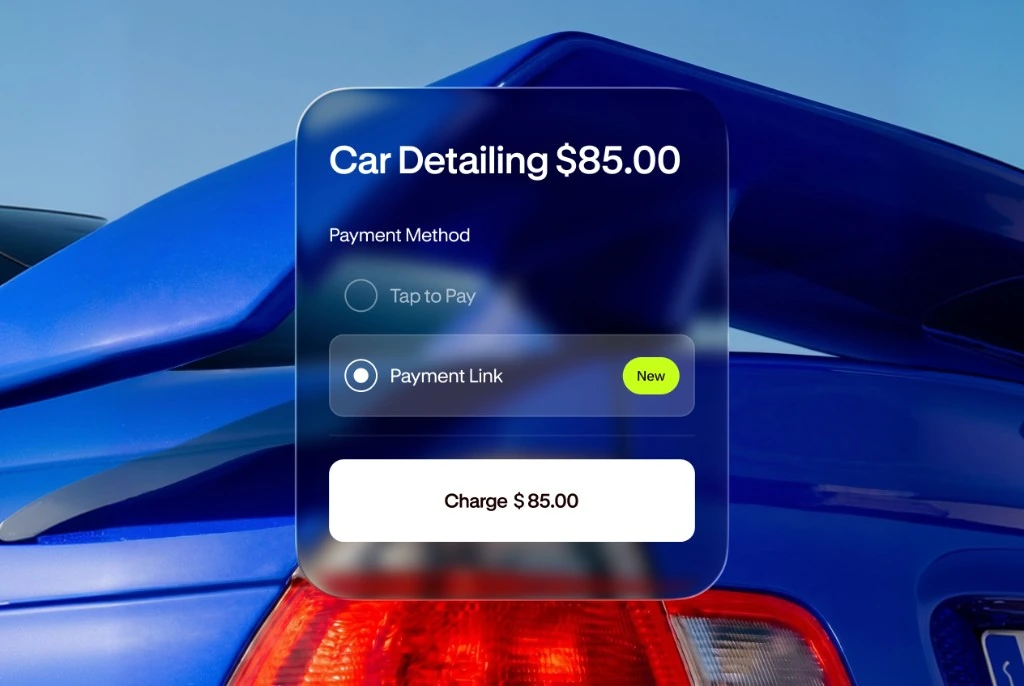
JIM's Payment Link for remote and website checkout runs a flat 4.99% + $0.30 per sale, while a card tapped in person sits well below that. If most of your debit card payment acceptance happens face to face, contactless is the cheaper channel.
Protect Settlement and Cash Flow
Settle and batch your transactions daily. Under many processors' tiered pricing plans, batches settled late can be reclassified into higher-cost fee tiers, quietly raising your cost. Check your own processor's documentation for its settlement window, then check how fast you can reach your money, since slow payouts can strain a small operation as much as the fee itself.
The Debit Cost Leak Audit
Late batching is one of several downgrade triggers that push a sale into a higher-cost tier without your knowledge. Run this five-point audit on your next statement to find where fees leak.
| Leak trigger | What happens | Fix |
|---|---|---|
| Late batch settlement | Transactions settled past the processor's cutoff window reclassify into a higher tier | Batch daily before your processor's cutoff time |
| Signature debit on a PIN-capable card | The sale runs over the more expensive Visa or Mastercard network instead of a PIN network | Enable PIN debit prompts at your terminal |
| Card-not-present on a card-present plan | Keyed-in transactions downgrade to a higher rate than tapped or dipped cards | Route remote sales through a payment link built for card-not-present |
| Downgraded reward or business cards | Premium card types fall into a non-qualified tier under tiered pricing | Switch to interchange-plus pricing to see the real cost per card type |
| Missed fraud-prevention setup | Skipping AVS or tokenization can trigger avoidable surcharges | Turn on address verification and tokenization in your gateway |
For merchants who take most payments in person, one contactless setup makes that all-in cost easy to see up front. Tap with JIM charges a flat 1.99% per contactless sale, with no hardware to buy, no monthly fee, and no setup charge, and your funds land in your JIM balance instantly. If most of your debit sales happen face to face, explore Tap with JIM or set up your account in the app.
Debit Card Processing Fees FAQ
How Much Are Debit Card Processing Fees?
Most merchants pay between 1.5% and 2.9% per debit sale, but that headline number hides three costs: the interchange set by the card networks, the small network assessment, and your processor's markup. Only the markup is truly negotiable.
Compare the all-in rate on your statement rather than one advertised percentage. A high-volume seller and a low-ticket shop can pay very different effective rates on the same plan.
Do Visa Debit Cards Have Fees for Merchants?
Yes. Accepting a Visa debit card carries a processing cost you pay as the business, the same way any debit card does. That is separate from any fee the cardholder's own bank might charge them, which you do not control. You cannot pass your processing cost back to the buyer at checkout.
Can You Charge a Debit Card Fee to a Customer?
No. Adding a surcharge or checkout fee to a debit payment is prohibited under Visa and Mastercard rules, and the ban holds even when a debit card runs as signature debit. Manage the cost inside your business instead of charging the buyer.
Frequently Asked Questions
How Much Are Debit Card Processing Fees?
Do Visa Debit Cards Have Fees for Merchants?
Can You Charge a Debit Card Fee to a Customer?



Sell and get paid in seconds with Jim