How to start a frozen yogurt business: a 10-step guide
See article summary
- Plan for $50,000 to $250,000 in startup costs, mostly machines and build-out.
- Form an LLC, get a free EIN, and secure a food service license from your county.
- Buy 2 to 3 soft-serve machines and a cold topping bar sized to your foot traffic.
- Price by weight at $0.55 to $0.75 per ounce to protect a 75 to 80 percent gross margin.
- Keep labor between 25 and 35 percent of revenue and six months of working capital on hand.
Opening a frozen yogurt shop costs $50,000 to $250,000, and the owners who succeed treat it like a numbers problem first and a dessert concept second. The frozen dessert market runs on steady demand from families, health-conscious customers, and students, but margins depend on how tightly you control mix cost, topping waste, and labor.
This guide walks through the 10 practical steps to secure funding, pick a location, get licensed, buy equipment, and launch a profitable frozen yogurt business in the U.S.
How do you create a business plan for a frozen yogurt shop?
A frozen yogurt business plan validates your local market before you spend on a lease or machines. Spend a week visiting other froyo shops during afternoons, after dinner, and on weekends. Note their customer flow, pricing, and which toppings move fastest. That ground-level data tells you whether your neighborhood can support another self-serve yogurt shop.
Market and competitor analysis
For a wider view, pull demographic data from your local chamber of commerce or the U.S. Census Bureau business formation statistics. Cross-reference foot traffic and income levels for two or three target neighborhoods. Operators who skip this step often discover too late that a location lacks the evening or weekend density a frozen dessert shop needs.
Estimate your startup costs
Startup costs typically run from $50,000 to over $250,000, and equipment plus build-out drive most of the total. Industry benchmarks put machines and refrigeration at roughly 40 percent of initial spend, with lease deposit and tenant improvements making up the next largest chunk.
Here is a sample breakdown of initial costs:
- Frozen Yogurt Machines: $5,000 to $15,000 per machine
- Refrigeration and Cold Topping Bar: $3,000 to $12,000
- Initial Inventory (mixes, toppings): $5,000 to $10,000
- Lease Deposit and Build-Out: $20,000 to $150,000+
Here are 3 immediate steps to take:
- Scout three local competitors and document your observations.
- Download a demographic report for two potential neighborhoods.
- Create a preliminary budget spreadsheet using the cost categories above.
How do you set up your legal structure and get licensed?
Form a Limited Liability Company (LLC) to separate your personal assets from business debts and lawsuits. An LLC also offers pass-through taxation, meaning profits are taxed on your personal return, which simplifies your accounting. The IRS classifies LLCs as partnerships, corporations, or disregarded entities depending on membership and elections, as explained on the IRS limited liability company page.
Operating as a sole proprietorship saves on initial fees but leaves your personal finances exposed. Filing for an LLC with your Secretary of State typically costs between $50 and $500, a foundational step for protection. The SBA business structure guide compares LLCs, sole proprietorships, and corporations so you can confirm the right fit.
Secure your permits and licenses
Your main point of contact is your local county health department. You need a Food Service License, which requires an inspection and costs $200 to $1,000. The process can take several weeks, so apply early.
You also need a general business license from your city or county, which usually runs $50 to $400 annually. Ensure your location has a Certificate of Occupancy and that all employees obtain a Food Handler's Permit, which costs about $10 to $15 per person.
Here are 4 immediate steps to take:
- File for an LLC with your state's Secretary of State office.
- Apply for a free Employer Identification Number (EIN) on the IRS website.
- Contact your local health department for their food service application packet.
- Check your city's website for business license fees and application forms.
How do you secure insurance and manage risk?
General Liability insurance is non-negotiable because it covers customer accidents like slips and falls. A standard policy provides $1 million in coverage and costs $500 to $1,200 annually for a small shop.
Commercial Property insurance covers your equipment and build-out. Add endorsements for equipment breakdown and food spoilage, since a single freezer failure can wipe out your entire mix and topping inventory. A Business Owner's Policy (BOP) bundles general liability and property coverage together, often at a better price than buying them separately.
If you have employees, Workers' Compensation is required by law in most states to cover on-the-job injuries. The National Association of Insurance Commissioners notes that coverage is mandatory for most employers in every state except Texas, where employers can opt in.
Find the right insurance provider
Work with an agent who understands food service, since general agents may not grasp your specific risks. Providers like the Food Liability Insurance Program (FLIP), The Hartford, and NEXT Insurance specialize in the restaurant industry and understand equipment breakdown and spoilage endorsements.
Here are 4 immediate steps to take:
- Get quotes for a Business Owner's Policy (BOP) from two specialized insurers.
- Confirm your general liability coverage is at least $1 million per occurrence.
- Ask providers about adding endorsements for equipment breakdown and spoilage.
- Check your state's website for its workers' compensation requirements.
How do you find a location and buy equipment?
Aim for 800 to 1,500 square feet in a zone approved for food service, often labeled "Commercial" or "Retail." Check your city's planning department for zoning maps. High foot traffic near schools or shopping centers gives a self-serve yogurt shop its best advantage.
When you negotiate a lease, ask for a Tenant Improvement (TI) allowance. This is money from the landlord to help pay for your build-out, and it can save you thousands upfront.
Select your machines and supplies
Your frozen yogurt machines are your main production assets. A reliable new machine costs $5,000 to $15,000. Buying used is risky without a warranty, so require one. You also need a cold topping bar, refrigerators, and a walk-in freezer.
- Soft-Serve Machines (2 to 3 units): $10,000 to $45,000
- Refrigerated Topping Bar: $3,000 to $12,000
- Walk-In Freezer or Cooler: $5,000 to $15,000
- Point of Sale (POS) System: $1,000 to $3,000
For supplies like cups and spoons, look at distributors like FrozenDessertSupplies.com. They often have low or no minimum orders for basic paper goods, which helps manage cash flow when you start.
Here are 4 immediate steps to take:
- Identify three potential locations with high foot traffic.
- Ask a commercial real estate agent about typical Tenant Improvement (TI) allowances.
- Get quotes for two new soft-serve machines that include a warranty.
- Browse FrozenDessertSupplies.com to price out your initial inventory.
How do you set up your payment system?
Your customers expect fast, easy payment options. Most transactions are small and paid with credit, debit, or digital wallets like Apple Pay. Your payment system needs to keep lines moving during peak hours after school or on warm evenings.
Choose your payment processor
Traditional processors often charge 2.5 percent to 3.5 percent plus a fixed fee per sale. For a high-volume, low-margin business like frozen yogurt, those costs add up quickly across thousands of small tickets.
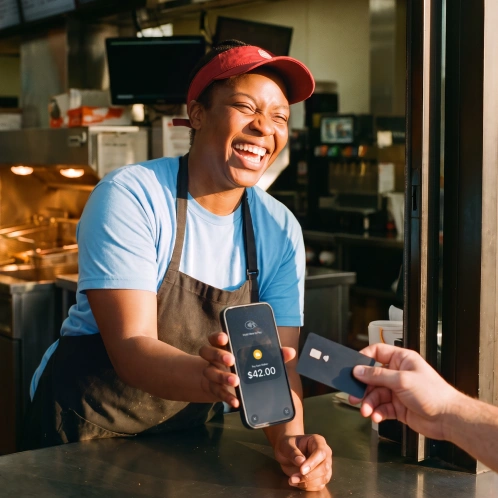
For a business that needs to accept payments on-site or on the go, JIM offers a streamlined solution. With JIM, you accept debit, credit, and digital wallets directly through your smartphone. At 1.99 percent per transaction with no hidden costs or extra hardware needed, it handles quick lines at the counter or at pop-up events. Compare that to a traditional POS at 2.5 to 3.5 percent plus a monthly terminal fee, and the savings on a $5 cup of froyo add up over a full season.
Getting started is straightforward:
- Get Started: Download the JIM app for iOS.
- Make a Sale: Type the sales amount, hit sell, and ask your customer to tap their card or device on your phone.
- Access Funds: Your money is available right on your JIM card as soon as the sale is done, with no waiting for bank transfers.
Here are 3 immediate steps to take:
- Compare the transaction fees of two traditional POS systems with JIM's 1.99 percent rate.
- Download the JIM app on an iOS device to explore its interface.
- Decide if you will need to accept payments at off-site events like farmers markets.
How do you secure funding and manage finances?
The SBA 7(a) loan is a popular choice for new food businesses. Lenders typically require an equity contribution from the borrower and a strong business plan to qualify. Interest rates are negotiated between borrower and lender subject to SBA maximums, as outlined on the SBA 7(a) loan program page. Start with your local bank or credit union.
For your machines, consider equipment financing. The equipment itself acts as collateral, which can make approval easier and free up your other capital for operational needs. Loan terms usually match the equipment's expected lifespan, from three to seven years.
Plan your working capital
A frequent oversight is focusing only on initial build-out costs, leaving little cash for the first few months. Keep at least six months of working capital set aside to cover rent, payroll, and inventory before your sales are consistent. That reserve usually falls between $30,000 and $60,000.
Look for local or state-level grants for small businesses. The SBA Lender Match service connects you with approved lenders in your area and can supplement a traditional loan to reduce your debt burden.
Here are 4 immediate steps to take:
- Contact your local bank to inquire about the SBA 7(a) loan process.
- Request a quote for equipment financing for your soft-serve machines.
- Calculate your six-month working capital needs based on your budget.
- Use the SBA's Lender Match service to find potential lenders.
How do you hire your team and set up operations?
Build your team
You will likely need two or three part-time Team Members to start. Their duties include greeting customers, restocking the toppings bar, running the register, and keeping the shop clean. In most areas, expect to pay $12 to $16 per hour, plus tips.
Every employee who handles food must have a Food Handler's Permit. The process is usually a short online course and test. Make this a condition of employment to ensure you comply with health department rules from day one.
Manage your daily operations
Operators who misjudge staffing during peak hours, like after school or on weekend evenings, lose sales to long lines. Keep your total labor cost between 25 percent and 35 percent of your revenue.
To organize schedules, use a system like Homebase or 7shifts. These platforms are designed for restaurants and help you manage availability and shift swaps. Create a detailed training plan, especially for cleaning the soft-serve machines, since improper maintenance is a frequent cause of breakdowns.
Here are 4 immediate steps to take:
- Write a job description for a Team Member position.
- Check your local health department's website for Food Handler's Permit courses.
- Explore the features of a scheduling software like Homebase or 7shifts.
- Create a daily and weekly cleaning checklist for all your equipment.
How do you market your business and attract customers?
Plan your grand opening and local outreach
Your grand opening sets the tone. A "Buy One, Get One Free" (BOGO) offer during the first weekend creates immediate buzz. Promote it with flyers in local community centers and on social media about two weeks in advance. The goal is to get people in the door.
Once you are open, build local partnerships. Connect with nearby schools or sports leagues for a "spirit night," where you donate 15 percent of sales back to their organization. This builds goodwill and brings in families.
Use simple digital and physical marketing
You do not need a large marketing budget. Start with an Instagram and Facebook page, focusing on colorful, high-quality photos of your yogurt and toppings bar. Consistency matters more than a high ad spend.
Pair your digital efforts with physical marketing. A simple punch card loyalty program, like "buy nine, get the tenth free," can increase repeat visits. A well-placed A-frame sign on the sidewalk can boost walk-in traffic.
Here are 4 immediate steps to take:
- Plan a "Buy One, Get One Free" offer for your opening weekend.
- Draft an email to a local school's PTA to propose a fundraiser night.
- Create an Instagram account and post three high-quality photos of your product.
- Design a "buy nine, get one free" loyalty punch card.
How do you set your pricing strategy?
Most frozen yogurt shops price by weight. A common range is $0.55 to $0.75 per ounce. This model is fair to customers and protects your profits. Pricing too low to attract traffic makes it difficult to cover rent and labor.
Your target food cost should be 20 to 25 percent of the menu price. That leaves a 75 to 80 percent gross profit margin on the product itself, before you pay for rent and labor. Track your mix and topping costs weekly to maintain that margin. Frozen yogurt mix runs roughly $0.10 to $0.15 per ounce, but heavy toppings like cheesecake bites and gummy bears can push food cost above 30 percent if customers overfill their cups, so weigh cups and monitor topping shrinkage.
An alternative is to charge a fixed price per cup size, like $5 for a small and $7 for a medium. This is simpler for customers but less profitable when people load up on heavy toppings.
To find your sweet spot, visit three local competitors. Buy a standard cup from each and weigh it to calculate their effective price per ounce. This gives you real data to base your own pricing on.
Here are 4 immediate steps to take:
- Visit three competitors to calculate their price per ounce.
- Decide if you will price by weight, by cup size, or use a hybrid model.
- Calculate your target food cost, aiming for a 20 to 25 percent benchmark.
- Set a final price per ounce or per cup size for your menu.
How do you maintain quality and plan for growth?
Establish your quality standards
Your yogurt's taste and texture must be consistent every day. Mandate daily taste tests for each flavor. Keep a temperature log for your machines, since they should hold the product between 17 and 22 degrees Fahrenheit to maintain the right consistency.
Monitor your shop's Google and Yelp pages. Respond professionally to all feedback, including negative reviews. Place small feedback cards near the register to gather direct input from customers.
Know when to scale
A key signal to hire more staff is when your labor cost consistently drops below 25 percent of revenue. That indicates you can afford more help without hurting your margin. Consistently long lines are another clear sign.
Before you open a second location, your first shop should be profitable for at least 18 to 24 months. You also need a trusted manager who can run the original store without your daily presence.
As you grow, basic spreadsheets become difficult to manage. Look at a dedicated restaurant POS system with advanced sales and inventory analytics. These platforms help you manage a larger operation or multiple locations more effectively.
Franchise or independent?
Many searchers weigh joining a frozen yogurt franchise against opening an independent shop. The franchise route charges an upfront franchise fee plus an ongoing royalty on gross sales, and in return you get an established brand, a proven operating playbook, and a supplier network that can speed up your opening. You give up control over your menu, toppings, pricing, and store design, since the franchisor sets those terms.
The independent route has no franchise fee and no royalties, so you control every dollar of startup spend and keep your full gross margin. You build brand equity from scratch, which takes longer, and you source and test every component yourself rather than following a proven template.
Choose the franchise route if you want a proven playbook and can absorb the fee and royalty. Go independent if you want full control over your menu and margins and are willing to build brand from scratch.
Here are 4 immediate steps to take:
- Create a daily quality checklist for taste tests and temperature logs.
- Set up Google Alerts for your business name to track online reviews.
- Calculate your labor cost as a percentage of revenue at the end of each week.
- Review the inventory management features of a dedicated restaurant POS system.
Starting a frozen yogurt shop is about more than just dessert; it is about creating a fun experience. Keep your topping bar fresh and exciting, and you have the steps to build your dream one swirl at a time.
When you open your doors, a simple payment process keeps lines moving. JIM lets you accept cards right on your smartphone for a flat 1.99 percent fee, with no extra hardware. Download JIM and get started.
Frequently Asked Questions
Is a frozen yogurt shop profitable?
How much does it cost to start a frozen yogurt business?
How much does frozen yogurt cost to make?
What licenses do you need to open a frozen yogurt shop?
How do you price frozen yogurt?


Sell and get paid in seconds with Jim