How to start a salsa business and sell your first jar
See article summary
- Total startup cost runs $1,200 to $3,900 for kitchen rental, licenses, equipment, and first ingredients.
- Permit approvals take 4 to 8 weeks, so file applications as soon as you secure a commercial kitchen.
- Salsa is an acidified food, so home kitchen sales are excluded under cottage food law in most states.
- A $1 million product liability policy costs $500 to $1,200 per year and is required by most grocers.
- Price jars at 100 to 300% over COGS, then add a 40 to 50% retail margin for stores.
Selling your first jar of salsa in the U.S. takes roughly $1,200 to $3,900 in upfront costs and 4 to 8 weeks for permit approvals. The U.S. premade salsa production market reached $962.5 million in 2025, with restaurants, grocery shoppers, and local market-goers buying steadily.
This guide covers recipe validation, the licenses and permits salsa requires, sourcing reliable suppliers, acquiring the right equipment, and pricing your first batch.
How do you plan a salsa business and validate your product?
Test your recipes at a small scale before you invest in equipment or permits. Offer samples at local farmers' markets or community events to get direct feedback. Ask specific questions about flavor, heat level, and what price people would pay. This initial research beats broad online surveys.
Next, analyze your competition. Visit grocery stores and specialty food shops. Note the prices, jar sizes, and ingredients of other local and national salsa brands. You can use databases like Statista for broader market trends, but direct observation reveals what is actually on shelves.
Estimate your startup costs
Initial costs can be managed carefully. A commercial kitchen rental might run $25 to $50 per hour. Budget around $200 to $900 for licenses and permits, as this varies by state. Add a 5 to 10% buffer to your initial ingredient budget to cover spoilage.
Here is a typical breakdown of initial expenses:
- Commercial Kitchen Rental: $200 to $400 (for first production runs)
- Licenses & Permits: $200 to $900
- Basic Equipment & Jars: $500 to $2,000
- Initial Ingredients: $300 to $600
- Total Estimated Range: $1,200 to $3,900
Here are 3 immediate steps to take:
- Visit three local stores to analyze competitor pricing and packaging.
- Draft a startup budget using the cost ranges provided.
- Get feedback on your main salsa recipe from 10 to 15 people.
How do you set up your legal structure and get licensed?
Form a Limited Liability Company (LLC) as your first move. It separates your personal assets from business debts. An LLC offers liability protection without the complex tax filings of a corporation, as profits and losses pass through to your personal tax return.
With your business structure decided, the next layer is licensing. Your salsa is regulated at federal, state, and local levels. The main federal body is the Food and Drug Administration (FDA), which sets rules for acidified foods like salsa and mandates clear nutrition labeling.
Navigate permits and inspections
At the state level, you will likely need a Food Processor License. Check your state's Department of Agriculture website for the specific application. Locally, your county health department issues the permit to operate from a commercial kitchen, which involves an inspection that costs $100 to $500.
Permit approvals can take 4 to 8 weeks. Start the application process as soon as you secure your commercial kitchen space to avoid delays. These documents are required to sell legally.
Can you make and sell salsa from home?
Most states exclude acidified foods like salsa from cottage food law exemptions, which means you cannot produce salsa for sale in a home kitchen. Salsa qualifies as an acidified food because it combines low-acid ingredients, such as onions and peppers, with an acid like vinegar. Food safety regulators classify these as higher risk because improper acidification can allow harmful bacteria to grow.
The practical consequence is that you need a licensed commercial kitchen, a Food Processor License, and an approved scheduled process filed with the FDA. Cottage food laws, which let home kitchens sell low-risk baked goods and jams without a commercial license, do not cover jarred salsa. Source: State cottage food law guidance from the National Agricultural Law Center.
What is the Better Process Control School requirement?
The FDA requires every commercial processor of acidified foods to operate under the supervision of a person who has completed a Better Process Control School. This training is mandated under 21 CFR 114.10 and 21 CFR 108.25, and it covers how to set a safe scheduled process, test finished pH, and document production runs.
Enrollment costs between $360 and $1,000 depending on the provider. Universities including Cornell, Nebraska, and Washington State offer the acidified foods course, and online options exist for around $500. Plan to take this course before your first commercial batch, because you cannot legally ship or sell acidified salsa without a certified supervisor on hand.
Here are 3 immediate steps to take:
- File for your LLC through your state's Secretary of State website.
- Contact your local health department to get their commercial kitchen checklist.
- Find your state's Food Processor License application online to review its requirements.
How do you secure insurance and manage risk for a salsa business?
Your most important policy is Product Liability insurance. It protects you if a customer gets sick from your salsa. A general liability policy often does not cover foodborne illness claims, so confirm you have a specific product liability rider or a standalone policy.
Expect to pay between $500 and $1,200 annually for a $1 million product liability policy. This coverage is required by most grocery stores and distributors, so secure it before you start sales conversations. Source: FLIP, Food Liability Insurance Program, with annual policies starting at $299, accessed 08/2026.
Additional coverage to consider
Once you have product liability sorted, look into other policies. You will not need them all on day one, but be aware of them as you grow.
- Commercial Property Insurance: This covers your equipment, such as blenders and processors, against theft or damage.
- Workers' Compensation: This is required in most states as soon as you hire your first employee. It covers medical costs from work-related injuries.
Look for insurers that specialize in food businesses. Providers like the Food Liability Insurance Program (FLIP), Hiscox, or The Hartford understand the unique risks and can offer better-suited policies. A general agent may not grasp the nuances of food production.
Here are 3 immediate steps to take:
- Request a quote for a $1 million product liability policy.
- Review the food business insurance options from providers like FLIP or Hiscox.
- Outline a simple recall plan for your primary salsa recipe.
How do you find a kitchen and get equipped for commercial salsa production?
Rent space in a shared-use commercial kitchen. These facilities are already zoned for food production and pass health inspections. A 100 to 150 sq. ft. station is usually enough to start. When you review rental agreements, look for extra fees for cold storage or cleanup.
To manage costs, ask about monthly package deals instead of hourly rates. You might also negotiate a lower rate for off-peak hours, such as late nights or early mornings, when the kitchen is less busy. This can reduce your initial production expenses significantly.
Gather your production equipment
Your home blender will not work for commercial production. Health departments require NSF-certified equipment for safety and durability. While this gear represents an upfront cost, it is built to handle large batches. Buying used equipment from restaurant auctions can save you 30 to 50%.
- Commercial Food Processor: A Robot-Coupe R2N or similar costs $1,500 to $3,500.
- Digital pH Meter: This is required for acidified food safety. Expect to pay $50 to $150.
- Immersion Blender: For texture control, prices range from $100 to $300.
- Jars and Lids: Suppliers like Uline or Berlin Packaging sell these. A case of 12 jars (16 oz) costs around $15 to $20.
With your equipment list ready, you need suppliers for ingredients and packaging. For produce, build relationships with local farms or get a membership at a wholesale club like Restaurant Depot. They do not have minimum order quantities, which is great for small batches.
Here are 3 immediate steps to take:
- Tour two local commercial kitchens and compare their hourly rates.
- Price out a used NSF-certified food processor on a restaurant supply site.
- Contact a packaging supplier like Uline to get quotes for an initial order of 10 to 12 cases of jars.
How do you accept payments for salsa at markets and wholesale?
When you sell directly at farmers' markets, you need to accept card payments. For wholesale accounts with local stores, you will typically send an invoice. Standard payment terms for wholesale are often Net 30, meaning the store has 30 days to pay.
Choose your payment solution
Most salsa makers start with a mobile card reader or a Tap to Pay app for market sales, then add a simple invoice template for wholesale accounts. Look for a payment solution with low transaction fees and no monthly hardware costs. Many providers charge between 2.5% and 3.5% per transaction, plus fees for a card reader. These costs add up when you are just starting out.
The table below compares three common options for in-person salsa sales. Fees and terms vary, so confirm current rates on each provider's website before you decide.
| Processor | In-person rate | Hardware cost | Settlement speed |
|---|---|---|---|
| JIM (Tap to Pay) | 1.99% per tap | None, uses your phone | Instant to JIM card |
| Square | 2.6% + 15¢ per tap | Card reader from $0 to $59 | 1 to 2 business days |
| Stripe Terminal | 2.7% + 5¢ per tap | Reader from $59 | 2 to 7 business days |
Source: JIM's official website, accessed 08/2026. Square and Stripe rates are from each provider's official website, accessed 08/2026.
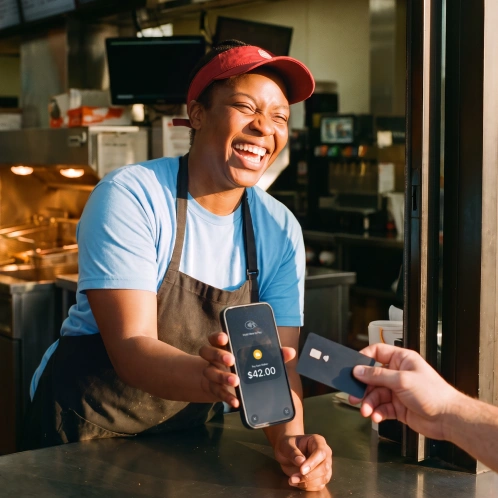
For salsa businesses that need to accept payments on-site or on-the-go, JIM offers a streamlined solution. With JIM, you can accept debit, credit, and digital wallets directly through your smartphone. It is a simple way to manage sales without extra equipment.
At 1.99% per transaction with no hidden costs, it is useful for farmers' markets or local food fairs. This rate is lower than the average commissions from other providers, which helps protect your profit margins on every jar sold. Choosing the right payment methods for your small business early on keeps your checkout fast and your fees predictable.
Getting started is straightforward:
- Get Started: Download the JIM app for iOS.
- Make a Sale: Type the sales amount, hit sell, and ask your customer to tap their card or device on your phone.
- Access Funds: Your money is available right on your JIM card as soon as the sale is done, with no waiting for bank transfers.
Here are 3 immediate steps to take:
- Download the JIM app to explore its features.
- Create a simple invoice template for your first wholesale orders.
- Compare JIM's 1.99% rate with one other payment processor you find online.
How do you fund a salsa business and manage the first six months?
New salsa businesses typically fund launch costs with an SBA Microloan of up to $50,000, a 0% interest Kiva loan of up to $15,000, or personal savings. Plan on $5,000 to $10,000 in working capital to cover the first six months of operations.
Find the right funding source
Traditional bank loans are difficult for new food businesses. Instead, look at SBA Microloans, which offer up to $50,000. These loans, provided through local nonprofit lenders, have interest rates between 8% and 13% and are designed for startups with limited credit history. The average SBA microloan is about $13,000, and repayment terms run up to seven years. Source: U.S. Small Business Administration, Microloans.
Another option is Kiva. It provides 0% interest, crowdfunded loans up to $15,000. The application process also doubles as a marketing tool, as you share your story with potential backers who become your first customers. This builds community support from day one. Source: Kiva U.S. borrower program.
Plan your first six months of cash flow
Your startup budget gets you open, but working capital keeps you running. You will need cash for ingredients, kitchen rent, and marketing for the first six months before sales become consistent. A safe estimate for this period is between $5,000 and $10,000.
A common miscalculation is forgetting these ongoing costs. Salsa founders who focus only on launch day expenses run out of money just as their business starts to gain traction. Plan for this operational runway to avoid early cash flow problems.
Here are 3 immediate steps to take:
- Research the SBA Microloan program to find a local intermediary lender.
- Draft a six-month operating budget covering ingredients, rent, and marketing.
- Review the application requirements for a Kiva loan online.
How do you hire a team and set up operations for salsa production?
You cannot do everything yourself forever. Once you consistently sell 100 to 150 jars per week, it is time to hire your first part-time help. This frees you up to focus on sales and growth instead of just production.
Your first hires
Your first hire will likely be a Kitchen Assistant. This person handles chopping, mixing, bottling, and cleanup. Expect to pay $15 to $20 per hour. Most states require anyone who handles food to have a Food Handler Permit, which usually involves a short online course and test.
Avoid hiring friends or family without clear expectations. Draft a simple one-page job description that outlines duties and hours. This prevents misunderstandings down the road, even with people you know well.
As you expand to more markets, a Market Salesperson becomes valuable. They manage the booth, handle sales, and can also make small wholesale deliveries. For scheduling, a simple app like When I Work or a shared Google Calendar is enough to coordinate shifts.
Here are 3 immediate steps to take:
- Check your local health department website for Food Handler Permit requirements.
- Draft a simple job description for a part-time Kitchen Assistant.
- Review your weekly sales numbers to decide if you have hit the 100-jar benchmark.
How do you market your salsa and find customers?
Focus on direct sales first
Your first marketing channel should be direct sales at farmers' markets. Offer samples freely. A good target is to convert 10 to 15% of people who taste your salsa into buyers. Track this number to see which flavors perform best.
Once you have that data, approach local independent grocers. Bring a sample and a simple sell sheet with your story, ingredients, and wholesale pricing. Start with shops that already feature local products. They are more receptive to new brands.
Create a simple online presence
You do not need a full e-commerce site yet. An Instagram account is enough to start. Post photos of your market booth, fresh ingredients, and customers enjoying your salsa. Use local hashtags like #[YourCity]Foodie to attract nearby followers.
Salsa brands that try every social media platform at once tend to spread themselves thin. Master one channel first. Also, resist the urge to buy ads early. Your money is better spent on great packaging and a banner for your market stall.
Use partnerships to grow
Collaborate with other local food vendors. You could partner with a local tortilla chip maker for cross-promotions at the market. Or, offer your salsa to a local cafe for a special menu item. These partnerships introduce your brand to an established customer base.
Here are 4 immediate steps to take:
- Track your sample-to-sale conversion rate at your next market.
- Create a one-page sell sheet with your wholesale prices.
- Identify three local businesses for a potential partnership.
- Set up an Instagram account and make your first five posts using local hashtags.
How do you price salsa and manage profits?
Your pricing strategy starts with your cost of goods sold, or COGS. Calculate the cost for every single jar, including ingredients, the jar, the lid, and your label. Also add a small amount for your kitchen rental and labor to get a true per-unit cost.
Determine your markup
A standard markup for specialty foods is 100 to 300% over your COGS. If your cost per jar is $2.50, a 100% markup sets your wholesale price at $5.00. This gives you a 50% gross margin, which is a healthy target for a new food business.
Retailers need their own margin, typically 40 to 50%. That means your $5.00 wholesale jar will likely sell for $8.99 or $9.99 on the shelf. Salsa founders who skip this step tend to underprice their product for wholesale accounts.
Consider a concrete example. A specialty salsa brand priced at $8.99 on a Whole Foods shelf, with a wholesale price of $4.49 and a COGS of roughly $2.10, holds a 53% retail margin for the store and a 53% gross margin for the producer. Use this structure as a benchmark when you set your own shelf price.
With this in mind, revisit local stores. Do not just compare jar prices; calculate the price-per-ounce of your competitors. This shows you where your salsa fits in the market. Your premium ingredients and unique recipe should justify a price that reflects their value.
Here are 3 immediate steps to take:
- Calculate the total cost of goods sold (COGS) for one jar of your salsa.
- Research the price-per-ounce for three competing brands in a local store.
- Set your wholesale price and a manufacturer's suggested retail price (MSRP).
How do you maintain quality and scale commercial salsa production?
Quality control for salsa means testing every batch to a finished pH of 4.6 or below and logging the results. Scale up to a 20-quart food processor and a dedicated production space once weekly sales pass 300 jars.
Establish your quality standards
Consistency is your reputation. For every batch, you must test and log the pH level. The FDA requires acidified foods like salsa to have a finished equilibrium pH of 4.6 or below. A digital pH meter is your best tool for this.
Create a simple batch log sheet. Record the date, batch number, final pH, and any notes on taste or texture. This log is your defense if a quality issue ever arises. Salsa producers who skip this step cannot trace problems effectively.
Know when to grow
Once you consistently sell over 300 jars per week, it is time to think about bigger equipment. Your next big purchase will likely be a 20-quart food processor. This lets you make larger batches in less time, which lowers your per-jar labor cost.
When your shared kitchen rental exceeds 20 hours per week, you might want to explore a small, dedicated production space. Also, consider software like ReciPal to manage recipes and inventory. It helps calculate nutrition facts and track costs as your ingredient orders get larger.
Here are 4 immediate steps to take:
- Create a batch log template to track pH, date, and taste notes.
- Calibrate your pH meter before your next production run.
- Research the cost of a used 20-quart food processor.
- Explore the features of a food production software like ReciPal.
Your salsa business is about more than a great recipe. Success hinges on consistency, from the first sample to your thousandth jar. Build a batch log, file your scheduled process, and keep your per-jar COGS under control. When you are ready for those first market sales, you need a simple way to get paid. JIM lets you accept cards right on your phone for a flat 1.99% fee, with no extra hardware needed. It keeps your costs clear from day one. Download JIM and get ready for your first customer.
Frequently Asked Questions
Do I need a license to sell salsa?
Can I make salsa at home to sell?
How much does it cost to start a salsa business?
Is a salsa business profitable?
What insurance does a salsa business need?



Sell and get paid in seconds with Jim