How to start a seafood business: from catch to cash
See article summary
- Startup costs run roughly $50,000 to $100,000, plus six months of working capital.
- You must register your facility with the FDA and build a HACCP plan.
- An SBA 7(a) loan funds up to $5 million at prime plus 3% to 6.5%.
- Hold all seafood at 41°F or below per the FDA Food Code.
- JIM takes dockside and market payments at a flat 1.99% with instant settlement.
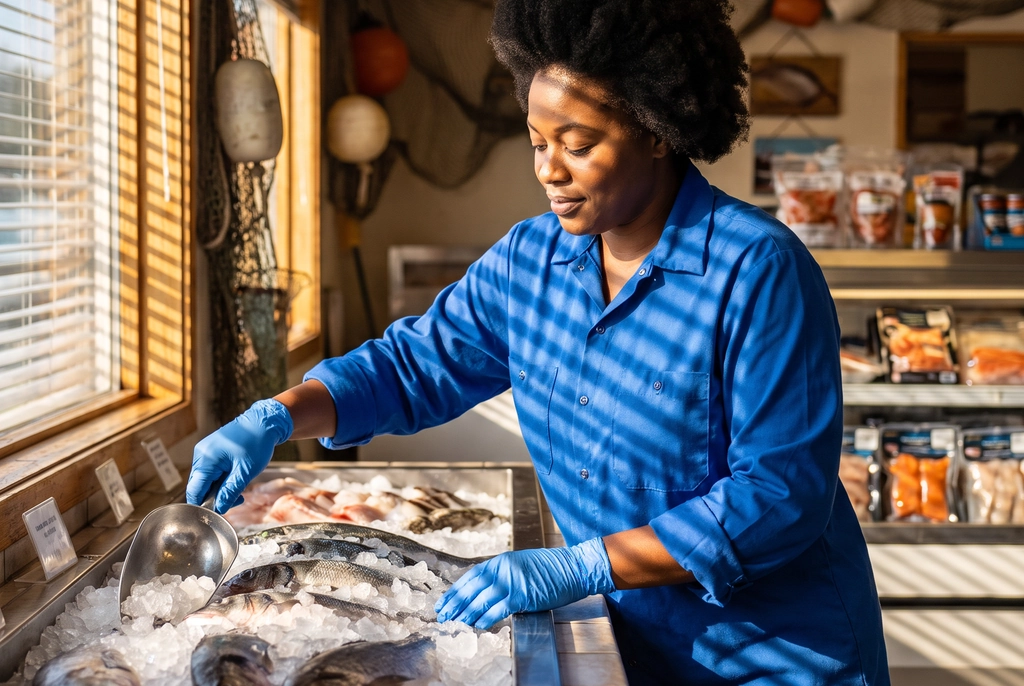
Seafood startups routinely underestimate cold-chain costs and the paperwork behind a single delivery. This playbook covers the permits, suppliers, location, funding, and payment setup you need to launch a seafood business in the U.S., with verified figures from the FDA, SBA, NOAA, and USDA.
Demand stays steady across restaurants, home cooks, and grocers, but the operators who last are the ones who treat temperature control, licensing, and cash flow as the real product.
Which seafood business model fits you?
Pick a model before you sign a lease, because each path carries a different cost ceiling and a different regulator. Wholesale, retail, online direct-to-consumer, dockside, and aquaculture all qualify as a seafood business, but they are not interchangeable.
| Model | Entry cost | Regulatory path | Best for |
|---|---|---|---|
| Wholesale distributor | High | FDA facility registration, HACCP plan, state dealer license | Founders with chef relationships and cold-storage access |
| Retail fish market | Medium | State retail food license, local health permit, HACCP for processing | Operators who want foot traffic and walk-in margins |
| Online direct-to-consumer | Medium | FDA HACCP, cold-chain shipping validation, state dealer license | Brands with strong storytelling and shipping logistics |
| Dockside or farmers' market | Low | State dealer license, temporary event permits, HACCP if processing | New operators testing demand with low fixed costs |
| Aquaculture (farmed seafood) | High | USDA and EPA oversight, state aquaculture lease, HACCP for processing | Operators who want to control the supply from spawn to sale |
Most new owners start dockside or wholesale to validate demand, then add retail or online once the customer base is real.
Week 1 checklist:
- Pick one primary model and one backup before you spend on equipment.
- List the federal and state permits that model requires.
- Estimate your entry cost band from the table above.
- Confirm whether your state requires a separate aquaculture or dealer license.
How do you validate a seafood business idea?
Validate by talking to chefs and fishmongers about what they actually buy, then cross-check demand with NOAA Fisheries consumption data before you spend on inventory.
Define your market and scope
First, research your local market. Talk to restaurant chefs and fishmongers about their supply needs. Visit farmers' markets and grocery stores to see what sells, at what price, and who the customers are.
Review consumption data from the NOAA Fisheries service to understand broader demand trends. This keeps you from overstocking niche products before you confirm a customer base.
Analyze competitors and budget for launch
Next, identify your direct competitors. Visit their shops or stalls to observe pricing, product quality, and customer service. Direct observation reveals more than online searches alone.
Budget roughly $50,000 to $100,000 in startup costs plus six months of working capital. Most of that budget goes to equipment and transport, so plan those line items first. A typical startup budget breaks down roughly like this:
- Permits and licenses: $500 to $2,000
- Refrigerated truck or van (used): $30,000 to $60,000
- Initial inventory: $5,000 to $15,000
- Equipment (scales, ice machine, cases): $10,000 to $25,000
Before you commit cash:
- Interview two local chefs about their seafood sourcing.
- Visit three local competitors to document offerings and prices.
- Draft a preliminary budget with the cost ranges above.
- Pull recent consumption statistics from the NOAA Fisheries website.
How do you set up your legal structure and licenses?
Form an LLC for liability protection, get a free EIN from the IRS, then register your facility with the FDA and build a HACCP plan before you handle any product.
Choose your business structure
Most new seafood businesses form a Limited Liability Company (LLC). The LLC protects your personal assets if the business faces debt or a lawsuit, and it offers pass-through taxation that simplifies your first filings. The seafood angle matters here: spoilage and contamination claims can exceed a general liability cap, and an LLC keeps those claims from reaching your house. That is the same liability logic behind the broader steps to start a business in any industry.
Once you register the LLC with your Secretary of State, get an Employer Identification Number (EIN), the federal tax ID you need to open a business bank account and hire employees. Apply for a free EIN from the IRS. An S-Corp election can lower self-employment taxes later, but an LLC is the right starting point.
One seafood-specific trap: if you sell across state lines, you may need a fish dealer license in each destination state, not just your home state. Check every state you plan to ship into before you load the truck.
Navigate federal, state, and local licensing
The Food and Drug Administration (FDA) oversees seafood safety at the federal level. You must register your facility with the FDA and create a Hazard Analysis and Critical Control Point (HACCP) plan, the preventive-control system that identifies food-safety hazards and the critical temperatures and steps that control them. Many new owners stumble here, so work from the FDA's Seafood HACCP guidance. The food-safety discipline is the same one any food business follows, from salsa to shellfish.
Next, get a state-specific fish dealer or wholesale food license. These typically cost $100 to $500 and take four to eight weeks to process. Finally, secure a general business license from your city or county and a permit from your local health department.
Before you file:
- Register your business as an LLC with your state's Secretary of State.
- Apply for a free EIN on the IRS website.
- Download the FDA's HACCP guidelines for fish and fishery products.
- Call your local health department to ask about their inspection process.
How do you insure a seafood business and manage risk?
Carry general liability, product liability for spoilage, commercial auto, and workers' compensation, and confirm spoilage coverage in writing before you buy a policy.
Understand your coverage needs
You need several types of insurance. General liability covers third-party injuries or property damage. Commercial auto covers your refrigerated vehicle. Product liability protects you if a customer gets sick from your seafood. Once you hire staff, workers' compensation is required in most states.
A frequent misstep is assuming a general liability policy covers spoilage. It does not. You need specific product liability coverage for contamination or spoilage claims, a major risk in seafood. Confirm this detail with your agent before you buy.
Budget for premiums and find a provider
Food and beverage businesses pay a wide range for a $1 million general liability policy. Insureon reports an average of about $44 a month for food and beverage general liability, but cold-storage and raw-protein handling often push premiums higher, so budget $500 to $1,500 and get at least three quotes. Commercial auto for a refrigerated truck runs several thousand dollars a year, so compare at least two carriers.
Get quotes from providers like The Hartford, Hiscox, or a marketplace like Insureon. They know food businesses and the spoilage exposure that comes with raw protein. A general agent will not find you the right coverage.
Before you buy a policy:
- Request quotes for a $1 million general liability policy.
- Ask insurers specifically about product liability that covers spoilage.
- Compare commercial auto rates from at least two providers.
- Contact an insurance broker who specializes in the food industry.
How do you find a location and buy equipment?
Lease 1,200 to 2,000 square feet in a commercial or light-industrial zone with floor drains and 3-phase power, then size your refrigeration to your day-one inventory.
Select and prepare your facility
Look for a space between 1,200 and 2,000 square feet in a commercial or light industrial zone. That gives you room for a walk-in cooler, a prep area, and a small office. Many new owners overlook floor drains and 3-phase power for refrigeration units, and both are expensive to add later.
When you negotiate the lease, ask for a tenant improvement allowance to offset the cost of a walk-in cooler or an electrical upgrade. Get any landlord contribution in writing before you sign.
Purchase your core equipment
Refrigeration and processing gear are your largest startup costs. Plan these purchases first, because your first wholesale order may require a minimum of 100 pounds or more, and you need adequate cold storage from day one.
- Walk-in cooler and freezer: $8,000 to $15,000
- Commercial ice machine (500 lb./day): $3,000 to $7,000
- Refrigerated display case: $5,000 to $12,000
- Stainless steel prep tables: $300 to $800 each
Before you sign the lease:
- Identify three potential locations with commercial zoning.
- Ask landlords about existing floor drains and 3-phase power access.
- Get price quotes for a walk-in cooler and a 500 lb. ice machine.
- Draft a lease proposal that includes a tenant improvement allowance.
How do you choose payment processing for perishable-goods sales?
Match the processor to your sales channel: Net 30 invoices for wholesale, and a flat-rate Tap to Pay tool for dockside and market sales.
Choose your payment setup
When you sell to restaurants, payment terms are often Net 30, which means you get paid 30 days after your invoice. For direct sales at markets or to individuals, you need to accept payment on the spot. Many new owners get caught by the different fee structures and by settlement delays that strain cash flow while they wait on wholesale invoices.
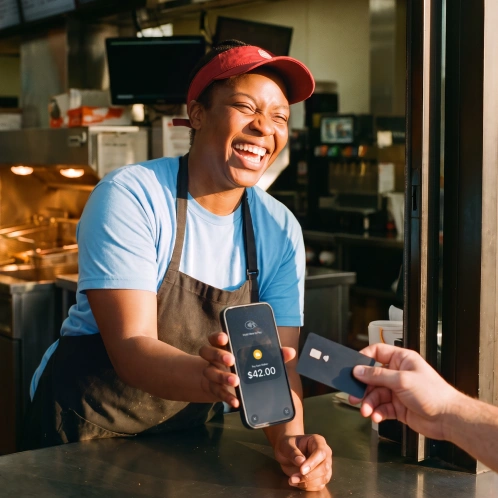
For on-site and on-the-go sales, JIM turns your smartphone into a card reader with Tap to Pay. You accept debit, credit, and digital wallets with no extra hardware. JIM charges a flat 1.99% per Tap to Pay sale, accepts Visa, Mastercard, American Express, and Discover, and makes funds available instantly on your JIM card.
Compare that against the standard in-person rates from the major processors before you commit:
| Processor | In-person rate | Hardware | Settlement |
|---|---|---|---|
| JIM | 1.99% flat | None (phone NFC) | Instant |
| Square | 2.6% + 15¢ | Optional reader | Next business day |
| Stripe | 2.7% + 5¢ | Optional reader | 2 business days |
| Toast | 2.49% + 15¢ | Toast hardware required | Next business day |
Source: Square's, Stripe's, and Toast's official websites, accessed August 2026. JIM rate per the JIM help center.
JIM's edge is the flat 1.99% with no hardware and instant settlement, which matters most for dockside and farmers' market sales where you cannot wait days for a bank transfer. On a $200 market sale, JIM costs $3.98; Square costs $5.20. Multiply that gap across a full season of market weekends and the difference compounds.
Getting started with JIM is straightforward:
- Get started: Download the JIM app for iOS.
- Make a sale: Type the sales amount, hit sell, and ask your customer to tap their card or device on your phone.
- Access funds: Your money is available on your JIM card as soon as the sale clears, with no waiting for bank transfers.
Choose your payment setup:
- Decide on your payment terms for wholesale versus direct sales.
- Compare payment processing rates, hidden fees, and settlement times.
- Download the JIM app to see how Tap to Pay works on your phone.
How do you fund a seafood business and manage cash flow?
Most startups use an SBA 7(a) loan up to $5 million, with rates capped at the prime rate plus 3% to 6.5% depending on loan size, and budget six months of working capital on top.
Find the right funding source
The SBA 7(a) loan program is the most common startup loan for seafood businesses. Loans go up to $5 million, and many seafood startups borrow in the $50,000 to $250,000 range to cover equipment and initial inventory. Lenders typically want a personal credit score above 680 and a strong business plan.
The SBA caps interest rates above a base rate (the prime rate or an optional peg rate), and the cap steps down as the loan grows: prime plus 6.5% on loans of $50,000 or less, prime plus 6.0% on $50,001 to $250,000, prime plus 4.5% on $250,001 to $350,000, and prime plus 3.0% on loans over $350,000. That is the actual rate math, not a vague "a few points above prime."
Beyond loans, look at industry-specific grants. The USDA's Local Food Promotion Program funds planning projects from $25,000 to $100,000 and implementation projects from $100,000 to $500,000, with a 25% match. NOAA's Saltonstall-Kennedy Grant awards $25,000 to $500,000 for fishery projects, a funding path also covered in this guide to starting a commercial fishing business. Both are competitive, so apply early.
Calculate your working capital
A lot of new owners focus on one-time equipment costs but forget cash for day-to-day operations. You need funds to cover inventory, payroll, and rent for at least the first six months before sales become consistent.
Budget $30,000 to $60,000 for this runway. The buffer prevents cash flow problems if a large restaurant client pays late or initial sales come in slower than you projected.
Before you apply for funding:
- Review the SBA 7(a) loan requirements on the SBA website.
- Check application deadlines for the USDA's Local Food Promotion Program.
- Calculate your estimated operating costs for the first six months.
- Speak with a loan officer at your local bank about business loan options.
How do you hire and schedule your team?
Start with a skilled Fish Cutter and a Delivery Driver, both with Food Handler's Permits, and keep total payroll under 30% of gross revenue.
Build your core team
You will likely need two key employees to start. A Fish Cutter handles all processing and portioning. A Delivery Driver gets orders to your clients. Look for people with prior seafood or butchery experience to reduce waste and protect quality from day one.
A skilled Fish Cutter typically earns $35,000 to $50,000 per year. A reliable Delivery Driver with a clean record commands $40,000 to $55,000. Inexperienced staff cost more in the long run through product loss, so do not underpay here.
Establish your daily workflow
All employees who touch the product must hold a state-issued Food Handler's Permit. Have your lead processor complete HACCP training, which signals safety to clients and reinforces your own quality standards.
Use scheduling software like Homebase or 7shifts to manage shifts and track labor against sales. Keep total payroll below 30% of gross revenue, a common food-business benchmark that protects margins when seafood prices swing.
Your first hires:
- Draft job descriptions for a Fish Cutter and a Delivery Driver.
- Check your state health department's website for Food Handler's Permit rules.
- Create a sample weekly schedule using a template from Homebase.
- Calculate a payroll budget at 30% of your first-year revenue goal.
How do you market and win wholesale clients?
Lead with in-person restaurant visits and a one-page sell sheet; a $50 to $100 sample box is usually your only customer acquisition cost.
Target wholesale clients directly
Your fastest path to revenue runs through wholesale accounts. Start with a simple one-page sell sheet listing your products, origin, and pricing tiers. Then identify 10 to 15 local restaurants that fit your ideal customer profile.
A personal visit during off-peak hours, between 2 PM and 4 PM, is highly effective. Bring a small, high-quality sample box. Chefs respond to relationships and consistent quality far more than ads.
Use social media to showcase quality
You do not need a full website at first. Create an Instagram profile as your digital storefront and post clear, well-lit photos of your daily catch. Use captions to note the fish type, origin, and arrival time. That transparency attracts chefs.
Your Customer Acquisition Cost (CAC) for a restaurant might be the cost of one sample box, around $50 to $100. If that sample lands a client who spends $1,000 per week, the return is immediate. Track outreach and follow up within a week.
Your first wholesale push:
- Create a one-page sell sheet with your product list and prices.
- Build a target list of 15 local restaurants to visit.
- Set up an Instagram account and plan your first week of posts.
- Budget for and prepare five sample boxes for potential clients.
How do you price seafood for wholesale and retail?
Use cost-plus pricing built on full landed cost, including freight, ice, and packaging; target 40% to 60% gross margin wholesale and 100% markup or higher for direct sales.
Set your pricing model
Most seafood wholesalers use a cost-plus pricing model. Calculate your total cost per pound, then add a markup. For wholesale, a 40% to 60% gross margin is a good target. For direct-to-consumer sales, aim for a 100% markup or higher. This is the same cost-plus method most retail businesses use to protect margin.
Keep margin and markup straight, because the article's earlier example confused them. If your landed cost for scallops is $15 per pound and you sell at $30, that is a 100% markup and a 50% gross margin. Margin is profit divided by sale price ($15 divided by $30 = 50%); markup is profit divided by cost ($15 divided by $15 = 100%). Many new owners use only the supplier's price and forget freight, ice, and packaging in the cost basis.
Margins vary widely by species. As an illustrative example, a commodity like farmed shrimp might run a thin 25% to 35% wholesale margin because price is set by import benchmarks, while a pre-portioned, sustainably sourced scallop can carry 50% to 60%. Price each species on its own landed cost and market, not on a single flat margin.
Analyze competitor pricing
Once you have your cost basis, check what competitors charge. Visit their stores or farmers' market stalls, and request wholesale price sheets from other suppliers to see their rates. This keeps you competitive without starting a price war.
Use market reports from a service like Urner Barry to benchmark commodity seafood prices. If your product offers extra value, like pre-portioning or sustainable sourcing, you can justify a price 10% to 20% above the market average.
Set your prices:
- Calculate the full landed cost for three of your core products.
- Visit two local competitors to document their retail prices.
- Decide on your target gross margin for wholesale and retail sales.
- Research one of your products on a market report service like Urner Barry.
How do you maintain quality and know when to scale?
Hold all seafood at 41°F or below per the FDA Food Code, log temperatures daily, and expand only when you hit clear revenue and capacity triggers.
Establish your quality standards
Your reputation depends on consistent quality, and temperature is the critical metric. Hold all seafood at 41°F (5°C) or below from receipt to delivery, the cold-holding standard in the FDA Food Code. Use daily temperature logs for your cooler and truck to prove compliance and catch issues early. The original 40°F figure is wrong; 41°F is the code.
Train your team on sensory checks for every delivery. Fish should have clear eyes, firm flesh, and a mild ocean scent, not a fishy odor. In-house handling is where perfect product from a supplier often gets ruined.
Consider a Marine Stewardship Council (MSC) certification. It shows customers you source sustainably, which justifies a higher price point and opens doors with eco-conscious restaurants.
Know when to grow
Growth should be deliberate. If you consistently work over 60 hours a week or turn down orders, hire another employee. Once your revenue tops $500,000 and your cooler sits at 80% capacity most days, explore a larger facility.
As you expand, manual tracking breaks down. Industry-specific enterprise resource planning (ERP) software manages inventory, purchase orders, and lot traceability, which a growing seafood operation needs. Compare your options by capability and revenue band:
| Software | Best for | Key capability | |---|---|---| | Seasoft | Mid-size processors | Seafood-specific lot traceability and yield reporting | | NorthScope | Distributors with multiple warehouses | Inventory, purchasing, and production tracking | | Aptean | Larger, multi-site operators | Integrated ERP with compliance and recall management |
Quality and growth triggers:
- Create a daily temperature log sheet for your cooler and truck.
- Research the Marine Stewardship Council (MSC) certification process.
- Set a revenue or capacity trigger for when you will expand your facility.
- Request a demo from a seafood ERP provider like Seasoft.
A seafood business is built on trust and quality. Your relationships with suppliers and chefs matter as much as the freshness of your catch, so go build a business known for reliability.
And when you make those first sales, you need a simple way to get paid. JIM turns your smartphone into a card reader, so you can accept payments on the spot for a flat 1.99% fee, with no extra hardware and no waiting for the money to settle. Download JIM to get started.
Frequently Asked Questions
Is a seafood business profitable?
Can I sell seafood from home?
How long does FDA facility registration take?
What temperature must seafood be held at?
Do I need a HACCP plan to sell seafood?




Sell and get paid in seconds with Jim