How to start a popsicle business: a founder's guide
See article summary
- Starting a popsicle business in the U.S. costs $4,000 to $15,000 in upfront investment.
- Core equipment includes a pushcart, freezer, and molds from suppliers like WebstaurantStore.
- You need an LLC, a local business license, a food handler permit, and a mobile food facility permit.
- Plan for $300 to $900 per year in liability insurance with $1 million in coverage.
- Target a 60 to 70 percent gross margin and a retail price of $4 to $5 per pop.
Starting a popsicle business in the U.S. costs $4,000 to $15,000 in upfront investment and takes roughly four to eight weeks of permitting before you can sell your first pop. Demand for artisanal frozen treats stays steady at farmers' markets, private events, and local shops, so the opportunity is real if you validate your concept, lock down the right licenses, and price for margin from day one.
How much does it cost to start a popsicle business?
Plan for $4,000 to $15,000 in total startup costs, with equipment making up the largest share. A quality pushcart or kiosk runs $1,500 to $7,000, a commercial freezer adds $2,000 to $5,000, and your first round of ingredients, sticks, and packaging takes $500 to $1,500. These ranges reflect typical quotes from food-service equipment suppliers like WebstaurantStore and Finamac; for example, WebstaurantStore lists commercial chest freezers starting around $600 and stainless steel prep tables from $150. Always request a written quote before you commit, since prices shift with material and freight costs.
New owners routinely underestimate the recurring cost of high-quality ingredients. Research wholesale suppliers before launch to get accurate pricing, rather than relying on retail estimates. A wholesale quote on fruit puree, for example, can be 30 to 50 percent below retail, which changes your entire cost structure from the start.
Validate your concept before you spend
Visit local farmers' markets, food festivals, and specialty grocery stores. Observe which flavors sell out first and what prices customers pay without hesitation. Check social media hashtags like #[yourcity]eats to see what artisanal treats are trending in your area.
Use Google Maps to identify every frozen dessert vendor within a 10-mile radius. Study their branding, flavor menus, and customer reviews. This research shows you where the market is crowded and where you can find a unique angle for your own line.
Here are 3 immediate steps to take:
- Visit two local farmers' markets to analyze their frozen treat sections.
- Create a detailed spreadsheet to track your estimated startup costs by category.
- Map at least five local competitors and list their top three best-selling flavors.
What licenses do you need to sell popsicles?
Most popsicle businesses need a local business license, a food handler permit, and a mobile food facility permit from the county health department, plus an approved commissary kitchen agreement. Requirements vary by state and county, so treat your local health department as the authoritative source.
Form a Limited Liability Company (LLC) to separate your personal assets from business debts. An LLC offers pass-through taxation, meaning profits are taxed once on your personal return. A C corporation, by contrast, is taxed on its earnings and distributions to owners are taxed again on the owners' returns, which is commonly described as double taxation. Source: IRS Publication 3402, Taxation of Limited Liability Companies.
Navigate permits and regulations
Your business is regulated by the FDA's Food Code, which sets the model for state and local health departments, plus your state and local authorities. Source: FDA Food Code. You will need a local business license, which typically costs $50 to $400 depending on your city or county. Everyone handling food must obtain a food handler permit, usually $10 to $15 through an approved online course.
The main permit is the Mobile Food Facility Permit from your county health department. Expect costs from $200 to $800 and a processing time of four to eight weeks. Many new owners do not realize this permit often requires a signed agreement with a commercial commissary kitchen for prep, storage, and sanitation, a step other food businesses like pickles and salsa also have to clear.
Check cottage food laws before you commit to a kitchen
If you plan to make popsicles at home, check whether your state's cottage food law covers frozen desserts. Most cottage food laws allow shelf-stable, non-potentially hazardous foods like cookies or jams, and many states exclude frozen dairy and water-based treats because they require temperature control. Texas, for example, limits cottage food production to specific non-potentially hazardous items, so a typical popsicle usually falls outside the cottage food exemption and requires a commissary kitchen. Source: National Agricultural Law Center state cottage food compilations. Verify your own state's list before you invest in a home setup.
Here are 3 immediate steps to take:
- Visit your state's Secretary of State website to review the LLC formation process.
- Contact your local health department to request their mobile food vendor application packet.
- Research and price out available commissary kitchens in your area.
How much does insurance cost for a popsicle business?
Budget $300 to $900 per year for general and product liability coverage with $1 million in limits, which is the standard requirement for most farmers' markets and event organizers. Food vendor specialists like the Food Liability Insurance Program (FLIP) and Insureon publish rates starting at $299 per year, and broader market data from Insuranceopedia places typical food vendor liability spend between $420 and $660 annually. Source: FLIP food vendor insurance cost.
You need General Liability insurance for accidents like a customer slip, and Product Liability insurance in case someone claims your popsicle made them sick. These policies are often bundled. Confirm your policy explicitly covers mobile operations, since some standard food policies exclude off-site vending.
If you use a vehicle for your business, add Commercial Auto insurance. Consider Inland Marine insurance for your cart and freezers while in transit or at an event location. If you hire help, Workers' Compensation insurance is required in most states.
Work with a specialist who understands food businesses, such as FLIP, Insureon, or Next Insurance. General agents may overlook mobile-vending and product liability nuances that matter for a popsicle operation.
Here are 3 immediate steps to take:
- Request a quote from a food vendor specialist like FLIP.
- Confirm your chosen policy explicitly covers mobile operations and product liability.
- Create an inventory of your equipment to determine the right amount of coverage.
Where do you produce popsicles and what equipment do you need?
Your first production space will likely be a shared commissary kitchen with 50 to 100 square feet of dedicated cold and dry storage. That is enough room for ingredients, finished product, and basic prep. Negotiate month-to-month terms so you can scale up or down without a long lease, and confirm their operating hours fit your production schedule.
Purchase your core equipment
A commercial blast freezer is a significant part of your budget, often $3,000 to $7,000. Fast freezing prevents large ice crystals and creates a smoother texture your customers will notice. You will also need a pushcart with a built-in cold plate freezer, which costs $2,000 to $6,000, plus $500 for commercial blenders and stainless steel prep tables. The same freezer and cart logic applies to other frozen dessert businesses like frozen yogurt, so you can reuse this equipment list if you expand your menu later.
For molds and smallwares, suppliers like WebstaurantStore and Finamac are good starting points. Request written quotes for two cart and freezer options before you buy, since shipping and customization can shift the final price by several hundred dollars.
Here are 3 immediate steps to take:
- Tour two local commissary kitchens to compare their monthly rates and storage options.
- Request price quotes for a blast freezer and a pushcart from two different suppliers.
- Contact a packaging supplier to ask about their minimum order quantity for custom wrappers.
How do you accept payments at a popsicle cart?
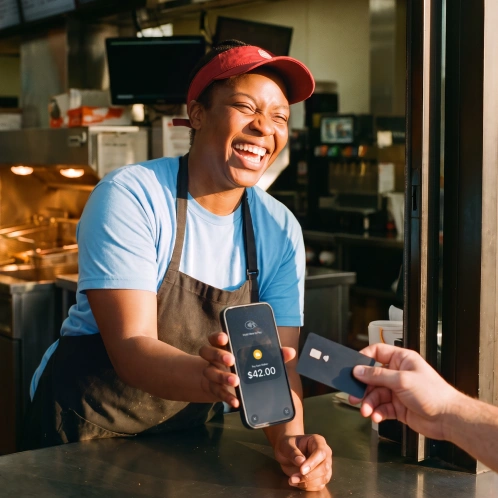
Most of your sales will be instant, card-based transactions at markets and events. Customers expect to pay with credit cards, debit cards, or digital wallets like Apple Pay. For catering gigs, require a 50 percent deposit upfront with a simple contract outlining the event details.
Transaction fees eat into thin margins on a $4 to $5 product. Look for a payment solution with low, flat-rate pricing, no monthly fees, and no required hardware. Mobile-first systems that run on your phone fit a cart operation better than countertop terminals, and same-day access to your funds helps you restock without waiting on bank transfers.
For a cart operation, the deciding criteria are flat per-transaction rate, no required hardware, and instant fund access. JIM meets all three: it turns your phone into a card reader with Tap to Pay at a flat 1.99 percent per transaction and no extra hardware, accepts Visa, Mastercard, American Express, and Discover plus Apple Pay and Google Pay, and makes funds available on your JIM Card immediately after each sale. Other mobile processors typically charge 2.5 percent to 3.5 percent per transaction and many add monthly hardware fees, so the gap adds up over a season of market sales. You can review the full process for selling with JIM in the help center.
If more than 20 percent of your sales come from benefit vouchers or meal cards, check whether your processor accepts them before you commit, since not all mobile card readers do. For the majority of popsicle carts, card networks and Tap to Pay cover the operation.
Here are 3 immediate steps to take:
- Draft a simple contract template for catering events that requires a 50 percent deposit.
- Compare the per-transaction rate of two mobile payment providers against your projected monthly sales.
- Confirm your chosen processor supports the card networks and digital wallets your customers use most.
How do you fund a popsicle business?
Most popsicle businesses start with personal savings or small loans. An SBA Microloan provides up to $50,000 through nonprofit intermediary lenders, with interest rates generally between 8 and 13 percent and repayment terms up to seven years. Source: SBA Microloan program. Lenders like Accion Opportunity Fund often work with food startups, and Kiva offers 0 percent interest crowdfunded loans up to $15,000. A broader small business funding overview can help you weigh these options against personal savings and grants.
Qualification for an SBA Microloan depends on your personal credit and a solid business plan. The Kiva process is different, since it relies on your ability to get friends and family to support your loan first.
Estimate your first six months of operating costs
With funding in mind, calculate your working capital. This is the cash you need for daily operations, including ingredients, market fees, insurance payments, and fuel before your sales become consistent. Plan for at least $3,000 to $6,000 for your first season.
Owners who focus entirely on startup equipment and forget about operating cash run into a crunch just as they launch. A clear six-month budget keeps you able to buy supplies and book events during the slow weeks before repeat customers build up.
Here are 3 immediate steps to take:
- Research two SBA Microloan lenders that serve your state.
- Create a detailed 6-month budget for your operating expenses.
- Review the Kiva application to see if you qualify for a 0% interest loan.
When do you hire for a popsicle business?
Wait to hire until you are consistently selling out at multiple events per week. Your first hire will likely be part-time Event Staff whose main job is to run the cart, handle sales, and restock inventory. Plan for an hourly wage of $15 to $20, plus tips.
Put expectations in writing from day one. A simple one-page document outlining responsibilities prevents the friction that comes with hiring friends without clear roles. Ensure every employee obtains a food handler permit before their first shift.
Streamline your operations
Once you have staff, you need a way to manage schedules and hours. Apps like Homebase or When I Work offer free plans for small teams. They let you build schedules, track time, and communicate with your staff from your phone.
Keep labor under 30 percent of your total revenue. If your labor costs creep higher, adjust your pricing or your staffing schedule for slower days.
Here are 3 immediate steps to take:
- Draft a simple job description for a part-time Event Staff position.
- Review the free plans for scheduling software like Homebase or When I Work.
- Add a "Labor Cost" category to your budget to track it against revenue.
How do you market a popsicle business?
Focus your initial efforts on Instagram. Post high-quality photos of your popsicles and behind-the-scenes content. Use local hashtags like #[yourcity]foodie and engage with followers of local food bloggers. Your goal is to get your first 10 catering inquiries through direct messages.
Resist the urge to spend on paid ads in your first three months. Organic growth builds an authentic local following without draining your cash reserves before you have consistent sales.
Forge local partnerships
Approach local businesses like coffee shops, boutiques, or yoga studios to host a pop-up event. Offer them a 10 to 15 percent commission on your sales for the day. This gives them a no-risk incentive to promote your event to their customer base.
Once you have consistent production, offer wholesale pricing to retailers. A standard wholesale discount is 30 to 40 percent off your retail price. This is a reliable way to get your popsicles into local grocery stores or cafes for steady revenue.
Here are 3 immediate steps to take:
- Create an Instagram business profile and identify 10 local food influencers to engage with.
- Draft a one-page pop-up proposal to send to three local businesses.
- Calculate your wholesale price based on a 30% discount from your retail price.
How do you price popsicles for profit?
Calculate your cost per pop
First, figure out your cost of goods sold (COGS) for each popsicle. Add up the price of all ingredients, the stick, and the wrapper. Suppose a strawberry pop costs $0.85 per unit when you factor in fruit, sugar, and packaging at wholesale prices. Add a 5 to 10 percent buffer for waste and recipe testing so your final price reflects your true cost.
Set your retail and wholesale prices
A gross profit margin between 60 and 70 percent is typical for retail ice cream and frozen dessert shops, according to IBISWorld industry data. Artisanal popsicle carts with low overhead and direct-to-consumer sales can target the upper end of that range, which typically means a 3x to 4x markup on your COGS. If your pop costs $0.85 to make, a retail price of $4 to $5 is a solid target. Source: IBISWorld ice cream and frozen dessert stores industry report.
Check what similar artisanal brands charge at local markets. Most sell for between $4 and $7. For wholesale, offer a 30 to 40 percent discount off your retail price. This structure lets retailers make a profit while giving you consistent, bulk orders.
Create event packages
For catering, build simple packages. A common model is a flat rate that includes a set number of popsicles and service time. For instance, charge $500 for 100 popsicles and two hours of cart service.
Here are 3 immediate steps to take:
- Calculate the exact cost per pop for your two most popular flavors.
- Visit a local market to document the prices of at least three competitors.
- Create a simple pricing sheet with options for single pops, multi-packs, and a basic catering package.
Is a popsicle business profitable, and how do you survive the off-season?
A popsicle business is profitable when your COGS, labor, and market fees stay below 50 to 60 percent of revenue and you sell consistently through the warm months. At a $4.50 average retail price and a 65 percent gross margin, a single cart selling 150 pops per day across a six-month season can gross roughly $120,000, with net profit depending on your labor and event fee mix. For illustration, a two-cart operation in a mid-sized metro with $9,200 in total startup costs broke even in month four once weekly market slots reached three, with wholesale accounting for 30 percent of revenue by month six. The figure that matters most is break-even: the number of pops per event that covers your fixed costs for that week.
Popsicle sales are seasonal in most of the U.S., so plan an off-season pivot before demand drops. Wholesale accounts with cafes and grocery stores keep revenue coming when market traffic slows, and catering for holiday parties, corporate events, and school functions extends your selling window into the cooler months. Some operators add a second product line, like hot cider or baked treats, to keep the cart busy from November through March. The same seasonal pattern affects other mobile frozen treat carts like water ice businesses, so the off-season playbook transfers directly.
How do you maintain quality and scale a popsicle business?
Establish your quality standards
Consistency is what turns a one-time buyer into a regular. Use a refractometer to measure sugar content (Brix) and keep a written target for each flavor, since consistent sweetness and texture depend on holding that level batch to batch. Fruit-based ice pops typically land between 15 and 26 degrees Brix, while creamier recipes run higher, 25 to 30 Brix, because dairy and stabilizers change the freezing point. Document your exact freezing time and temperature for each recipe so your product stays smooth even when you change ingredients or scale up. Source: Tasteful Science, ice pop formulation and Brix targets.
Know when to grow
Once you consistently sell out at three or more events per week for a month, hire your first full-time employee. This frees you up to focus on expansion rather than daily production and sales.
Add a second cart or a small retail spot when wholesale orders make up 40 to 50 percent of your revenue. That level of demand shows your brand has stability beyond seasonal markets. To manage growth, inventory software like MarketMan or Yellow Dog can help track ingredients and finished goods.
Here are 3 immediate steps to take:
- Purchase a refractometer to start measuring the Brix level of your batches.
- Set a clear revenue benchmark that will trigger your expansion to a second pushcart.
- Create a simple document outlining the exact freezing process for your top three flavors.
Your first six months: a quick recap
- Months 1 to 2: Form your LLC, secure permits, and book a commissary kitchen.
- Month 3: Buy equipment, finalize recipes, and run a soft launch at one market.
- Months 4 to 5: Add two to three weekly market slots and start Instagram outreach.
- Month 6: Add your first wholesale account or catering package and review your break-even.
As you make those first sales, keep your transaction cost under 2 percent. JIM charges a flat 1.99 percent per Tap to Pay sale with no hardware rental, which protects the margin you built into your $4 to $5 retail price. Download JIM to get started.
Frequently Asked Questions
Is a popsicle business profitable?
Do I need a commissary kitchen to sell popsicles?
What license do I need to sell popsicles?
How much does it cost to start a popsicle business?
Can I accept card payments at a popsicle cart without extra hardware?



Sell and get paid in seconds with Jim