Digital Banking for Small Business: 2026 Guide to Fees, Features & Top Platforms

See article summary
- Digital banking for small business means online and mobile tools for opening accounts, moving money, depositing checks, and monitoring cash flow without a branch.
- Essential features include mobile check deposit, accounting integration, ACH and wire transfers, and granular team permissions.
- FDIC insurance covers up to $250,000 per depositor at each insured bank; NCUA provides equivalent coverage at federally insured credit unions.
- A practical setup pairs a digital business checking account with a separate payment tool for in-person card sales.
- JIM handles in-person payments at a flat 1.99% per Tap to Pay sale, with instant payout to a Visa Prepaid Card.
Digital banking for small business is a set of online and mobile tools that let you open accounts, move money, deposit checks, and monitor cash flow without visiting a branch. Most small businesses today run on a digital bank for core checking plus a separate payment tool for in-person card sales.
If you sell in person, JIM handles that second piece: it turns your iPhone into a card reader for a flat 1.99% per Tap to Pay sale, with funds landing instantly on your JIM Visa Prepaid Card. This guide covers what to look for in a digital bank and how JIM fits alongside it.
How does digital banking help small businesses?
Digital banking lets you deposit checks from a job site, approve transfers between appointments, and watch cash flow in real time, all from your phone. It replaces branch hours and paper slips with an app that works on your schedule.
For cash-strapped startups, the speed matters. A digital account you can open in minutes means you start accepting and moving payments sooner instead of waiting days for branch paperwork. The right setup gives you faster deposits, clearer records, and fewer manual bookkeeping tasks.
What features should a business banking app have?
A modern digital banking platform should handle deposits, payments, and team access while giving you real-time visibility into your cash flow. The features below form the foundation of a setup that supports daily operations and growth.
Mobile deposit and check capture
Your mobile banking app should deposit checks through your phone's camera and make funds available the same day. Look for extended cutoff times and higher daily deposit limits, since those two settings decide how much of your money you can actually use on any given day.
Remote deposit saves hours every week and shortens the gap between receiving a check and having spendable cash. Platforms that process on weekends give you more flexibility for same-day availability.
Business checking integration with accounting tools
Effective platforms categorize transactions automatically and sync with bookkeeping software. Real-time notifications help you monitor cash flow and catch unauthorized transactions the moment they post.
Advanced tools add receipt capture, expense categorization, and vendor payment management. These features cut manual data entry and produce cleaner records for tax season.
ACH and wire transfers
Business banking moves money between accounts, to vendors, and from customers. Your digital bank should offer low-cost Automated Clearing House, or ACH, transfers for routine payments and secure wire transfers for larger, time-sensitive ones.
An ACH transfer is a bank-to-bank electronic payment that settles in one to two business days and typically costs a dollar or two. A wire transfer moves the same business day and can cost $20 to $35 for domestic wires. Scheduled recurring transfers and automated bill pay handle regular expenses without manual oversight.
User permissions and access controls
Growing businesses need team access without giving every employee full payment authority. Choose platforms with granular permissions that let bookkeeping staff view transactions without authorizing payments, or let managers pay bills within preset limits.
Two-factor authentication and user ID management protect business finances while enabling collaboration across your team.
Free vs. paid digital banking: which should you choose?
Not all business banking tools are equal, and the lowest-cost option is not always the best long-term choice. As your transaction volume and operational complexity grow, the features in your plan start to matter more than the monthly price tag.
Free business checking account options
Many digital banks offer free business checking accounts for businesses with straightforward banking needs and predictable transaction volumes. Free accounts typically include standard mobile banking, ACH transfers, and basic reporting.
They may charge for premium features like same-day wire transfers, cashier's checks, or advanced bookkeeping integration. If your transaction count stays predictable and you rarely need expedited services, a free account covers most daily operations.
When paid banking tools justify the cost
Growing businesses often benefit from paid accounts with enhanced features. Premium tiers may offer higher Annual Percentage Yield, or APY, on business savings, unlimited transactions, dedicated support, and priority processing for deposits and wires.
APY is the yearly rate your money earns in a savings account, including compounding. Calculate the value of those premium services against the monthly cost. If faster access to deposited funds prevents a late fee or lets you restock inventory, the monthly fee pays for itself.
Below is a decision framework for matching account type to business stage.
| Account type | Deciding criterion | Typical monthly cost | Best for |
|---|---|---|---|
| Free digital checking | Under 200 monthly transactions | $0 | Solopreneurs, freelancers, new LLCs |
| Mid-tier business account | 200 to 500 monthly transactions, need wire transfers | $10 to $20 | Growing service businesses, small retail |
| Premium business account | 500+ monthly transactions, multi-user access | $20 to $30+ | Established businesses with staff bookkeeping |
Cost figures are illustrative ranges to guide comparison; confirm exact fees on each bank's current fee schedule before opening an account.
How do you integrate payment processing with digital banking?
Your digital bank handles core checking, while a separate payment tool handles in-person and remote card sales. Keeping these two functions separate gives you cleaner records and faster access to sales revenue.
Connecting JIM to your business bank account workflow
JIM simplifies in-person payment acceptance. When customers pay via credit card or digital wallet through JIM's Tap to Pay, funds land on your JIM Visa Prepaid Card instantly. Transfer money to your business checking account as needed.
This setup gives you immediate access to sales revenue while keeping a clean separation between payment processing and business banking. JIM charges a flat 1.99% per Tap to Pay sale, with no monthly fees and no hardware purchase. See full pricing and fee details on JIM's pricing page.
The JIM Card is a virtual Visa Prepaid Card issued by Lead Bank, Member FDIC. Funds held on the JIM Card are FDIC insured up to $250,000 through Lead Bank.
Managing cash flow between multiple banking tools
Successful businesses often use several financial tools: a primary business bank account for operations, JIM for payment processing, and sometimes separate accounts for taxes or equipment. Establish clear workflows for moving money between them.
Set up automatic transfers from your JIM card to your business checking account on a daily or weekly schedule. This creates predictable cash flow patterns and simplifies bookkeeping by consolidating funds in your main operating account.
Zelle and peer-to-peer payment integration
Many digital banks support Zelle for instant business-to-business transfers. This helps when paying contractors, splitting bills with partners, or collecting from clients who prefer peer-to-peer apps.
Zelle transfers between participating banks typically complete within minutes. Transaction limits may restrict use for larger business payments, making traditional wire transfers necessary for major expenses or vendor payments.
Is digital banking safe for small businesses?
Yes, digital banking is safe when you use FDIC-insured platforms and enable the security features available. Protection comes from federal deposit insurance, regulatory oversight, and the security controls you activate on your account.
FDIC and NCUA insurance protection
All legitimate business banks carry Federal Deposit Insurance Corporation, or FDIC, insurance. The FDIC, which insures deposits up to $250,000 per depositor at each FDIC-insured bank, covers checking, savings, money market, and certificate of deposit accounts. Coverage is automatic when you open an eligible account, and it applies to online banking platforms the same way it applies to traditional institutions.
Credit unions carry equivalent protection through the National Credit Union Administration. The NCUA insures each credit union member for at least $250,000 at a federally insured credit union, backed by the full faith and credit of the United States government.
Some fintech companies partner with FDIC-insured banks rather than holding bank charters themselves. JIM is a financial technology company, not a bank; banking services are provided by Lead Bank, Member FDIC. Confirm these relationships so your deposits receive the proper protection.
Digital security best practices for business owners
Mobile banking apps use encryption, biometric authentication, and device recognition. Enable all available security features and use strong, unique passwords for banking access on every device.
Monitor account activity daily through push notifications and mobile alerts. Set up real-time notifications for all transactions, login attempts from new devices, and changes to account settings. Quick detection protects your business finances from unauthorized access.
Equal Housing Lender and NMLS compliance
Some digital banking platforms offer lending products alongside deposit accounts. Lenders that extend credit secured by a dwelling must comply with Equal Housing Lender regulations. Mortgage loan originators register through the Nationwide Multistate Licensing System, a database consumers can verify through NMLS Consumer Access.
Review lending terms carefully and understand how business credit decisions might affect personal credit if you have provided personal guarantees. Responsible lending practices protect both business owners and the broader financial system.
How do you set up digital banking for your small business?
Moving to a digital-first banking setup is an operational shift that affects how your team deposits funds, pays vendors, and monitors cash flow. The steps below cover enrollment, tool integration, and team training.
Account opening and enrollment requirements
Most digital banks streamline enrollment through mobile apps, requiring basic business information, tax identification numbers, and identity verification. The process typically involves uploading business formation documents and completing identity checks.
A neobank is a digital-only financial institution that operates without physical branches and partners with a chartered bank to hold customer deposits. If you use a sole proprietorship, the bank may accept your Social Security number; an LLC or corporation provides an Employer Identification Number, or EIN, which is the federal tax ID the IRS assigns to a business entity.
Three immediate steps to get started:
- Gather your business formation documents, recent tax returns, and government-issued identification
- Download your chosen bank's mobile banking app from the App Store or Google Play
- Complete the enrollment process and make any required initial deposit
Connecting existing business tools and banking services
Modern digital banking platforms integrate with popular business software including QuickBooks, FreshBooks, and payment processors. These connections automate transaction categorization and reduce manual bookkeeping work.
Connect your digital bank to existing business credit card accounts and payment apps to centralize financial management. This integration provides a comprehensive view of business finances across all accounts and payment methods.
Training your team on new banking tools and permissions
If multiple team members need access to business banking, invest time in proper training. Set up user accounts with appropriate permissions, demonstrate key features through hands-on practice, and establish clear procedures for common banking tasks.
Create simple reference guides for frequent activities like mobile deposit, bill payment, and transaction review. Clear processes prevent errors and ensure smooth daily operations as your team adapts to new banking tools.
What are the real costs of digital banking?
Choosing a digital banking platform without understanding its fee structure can quietly erode margins over time. A clear view of how fees accumulate lets you evaluate the real cost of banking, not just the advertised rate.
Understanding fee structures across banking solutions
Digital banks use several fee models. Some charge monthly maintenance fees offset by minimum balances, while others use per-transaction pricing for specific services. Compare total costs based on your actual usage patterns rather than advertised rates alone.
Calculate monthly costs, including account fees, transaction charges, ATM fees, and charges for services like wire transfers. Factor in the time saved through efficient digital banking tools when evaluating total cost of ownership.
A sweep account automatically moves idle funds from checking into an interest-earning account and back when you need to cover payments, so your cash keeps earning instead of sitting idle.
Hidden costs and fee structures to monitor
Review fee schedules for charges that might not be obvious during account opening. Common surprise fees include overseas transaction charges, expedited transfer fees, stop payment charges, and penalties for low balances.
Some digital banks charge for paper statements, cashier's checks, or customer service calls. Understanding these costs upfront helps you budget accurately and avoid unexpected expenses.
Industry-specific considerations for small business digital banking
Different industries place different demands on banking systems, and a one-size-fits-all account rarely meets every operational need. Understanding how your sector handles deposits, payments, and cash flow helps narrow down the right solution.
Real estate and professional services banking needs
Real estate professionals often need trust account management, large wire transfer capabilities, and integration with title company systems. Attorneys handling client funds must follow state Interest on Lawyers' Trust Accounts, or IOLTA, rules, which require holding client funds in a separate, interest-bearing account with specific recordkeeping. Confirm your bank supports segregated trust accounting before opening an account for regulated client funds.
Construction companies might prioritize banks with strong mobile capabilities for job site banking and progress payment management. Professional services firms often need detailed expense tracking and client payment processing integration.
Multi-location business considerations and ATM access
Businesses operating across multiple states should verify their digital bank handles interstate transactions efficiently. Some regional banks may have limitations on out-of-state operations or charge higher fees for certain banking services.
Consider how you will handle cash deposits if your business generates significant cash revenue. Digital-only banks may require partnerships with retail locations for cash handling, while others provide fee-free ATM networks for deposits.
How do you transition to digital banking?
Moving your business finances to a digital banking platform is a process, not a single event. Planning the transition carefully reduces disruption to daily operations and protects your cash flow during the changeover.
Timing your transition and managing the changeover
Plan your switch to digital banking during slower business periods when you can monitor the transition carefully. Open new accounts and test key features while maintaining existing banking relationships temporarily.
Run parallel operations for several weeks, using both old and new banking systems for non-critical transactions. This overlap period helps identify any issues with the new platform before fully committing your business finances.
Updating payment processing and business operations
Notify customers, vendors, and automatic payment services about banking changes well in advance. Update direct deposit information for employees and automatic withdrawal authorizations for business expenses like utilities and software subscriptions.
If you add JIM for payment processing, you can begin accepting credit card and debit card payments immediately while transitioning main banking relationships. Instant access to funds through JIM improves cash flow during the transition period.
Choosing the right digital banking mix for your small business
Digital banking changes how small business owners manage money, offering speed, convenience, and cost savings over traditional banking relationships. The right approach combines a capable digital bank for core business functions with a flexible payment solution like JIM for in-person transactions.
Your choice of business online banking affects daily operations, cash flow management, and growth potential. Evaluate options based on your specific industry needs, transaction patterns, and growth plans. Prioritize security, integration features, and responsive customer support whether you choose an online-only platform or a traditional bank with strong digital capabilities.
For immediate payment processing while you research digital banking options, JIM lets you start accepting credit card payments on your iPhone today. No additional hardware required, just a flat 1.99% fee and instant access to your funds. Learn more about how Tap to Pay works to see the setup in action.
When you are ready to evaluate processors, compare the best credit card processing for small business options across different business models and fee structures.
Frequently Asked Questions
Can I open a business bank account online with no deposit?
Do digital banks accept cash deposits?
What is the best online bank for an LLC?
How long does it take to open a digital business account?
Is digital banking safe for my business money?
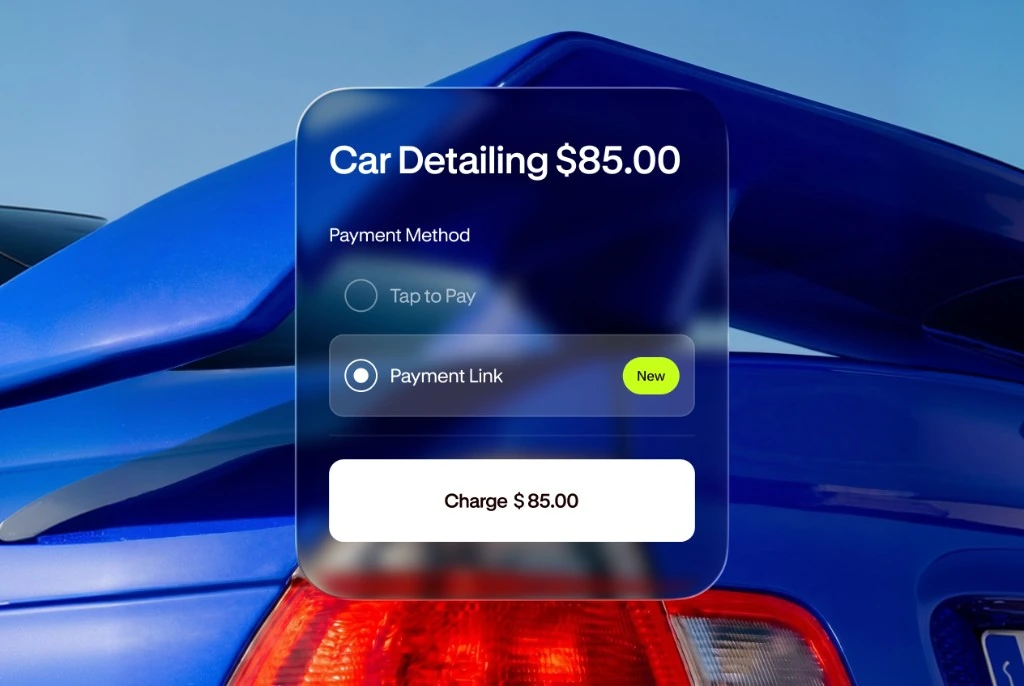



Sell and get paid in seconds with Jim