How to start an acai bowl business: from idea to opening day (updated for 2026)
See article summary
- Opening an acai bowl shop in the U.S. costs $30,500 to $92,000, covering equipment, inventory, permits, and build-out.
- Form an LLC, get a free EIN from the IRS, and secure a health permit before finalizing your kitchen layout.
- Plan 4 to 8 weeks for the food facility health permit, which is the timeline driver for most openings.
- Target a 25% to 35% food cost per bowl, with $40,000 to $80,000 in working capital for the first six months.
- Accept card payments from day one with JIM Tap to Pay at a flat 1.99% per sale, no extra hardware.
Opening an acai bowl shop in the U.S. costs between $30,500 and $92,000, and you can reach opening day in roughly 8 to 16 weeks once you start the health permit clock. The timeline hinges on your food facility permit, which takes 4 to 8 weeks after your kitchen passes inspection, so the permit application drives every other decision in this guide.
Demand is steady. Health-conscious consumers, gym-goers, and students keep the quick-service healthy food market in the billions, and acai bowls command premium prices when you control your food cost. The 10 steps below cover concept validation, funding, licensing, and opening day.
Step 1: How do you plan an acai bowl business and validate the concept?
Your business plan and market research confirm whether your location has enough paying customers to support an acai shop startup cost of $30,500 to $92,000.
Research your target market first. Spend a few days in potential neighborhoods to observe foot traffic near gyms, schools, and office parks. Review local demographic data on your city's government website to understand income levels and age groups in the area.
Analyze your competition
Use Google Maps and Yelp to find all nearby cafes, juice bars, and quick-service restaurants. Track more than direct acai competitors, because anyone selling healthy, convenient food is fighting for the same customer. Note their menu, prices, and online reviews.
Estimate your startup costs
Budgeting for your launch is a detailed process. While costs vary by city, you can use these ranges as a starting point for your financial plan. A detailed budget helps you secure funding and manage your cash flow from day one.
- Kitchen Equipment (blenders, freezers): $15,000 - $30,000
- Initial Inventory (acai, fruit, toppings): $5,000 - $10,000
- Permits & Licenses: $500 - $2,000
- Rent Deposit & Build-out: $10,000 - $50,000+
Your total initial investment will likely fall between $30,500 and $92,000. The final number depends heavily on your location and the extent of renovations needed, so add a 15% contingency for unexpected construction costs.
Here are 3 immediate steps to take:
- Scout three potential neighborhoods and track foot traffic for one week.
- Create a spreadsheet of five local competitors, detailing their menus and prices.
- Draft a preliminary budget based on the cost ranges above.
Step 2: How do you set up your legal structure and get licensed?
Form an LLC to protect your personal assets, get a free EIN from the IRS, then drive the food facility permit process that sets your opening date.
Register your business as a Limited Liability Company (LLC). This structure protects your personal assets from business debts and lawsuits. For federal taxes, the IRS treats a single-member LLC as a disregarded entity by default, so profits pass through to your personal return. A multi-member LLC is taxed as a partnership by default. Either way, you avoid the double taxation that C corporations face. You can elect different tax treatment later by filing Form 8832 if your accountant recommends it.
Once your business is registered, get a free Employer Identification Number (EIN) from the IRS website. You need an EIN to hire employees and open a business bank account. For a broader overview of how to start a business, including business structure selection and EIN application steps, the JIM startup guide covers each phase in detail.
Navigate your permits and licenses
Your local health department is the main regulatory body you will work with. A frequent delay happens when a kitchen layout fails inspection. Get the health department's checklist before you finalize your floor plan to avoid costly changes later, and review the food facility permit process for frozen food businesses to see the full inspection and food handler timeline. You will need a few key permits.
- Food Facility Health Permit: This is for your physical location. Expect costs of $300-$1,000 and a 4-8 week approval process after inspection.
- Food Handler's Permit: Every employee needs one. This usually involves a short online course and costs around $15 per person.
- Seller's Permit: This allows you to collect sales tax. You can register for it through your state's department of revenue website.
Here are 4 immediate steps to take:
- File for an LLC with your state's Secretary of State office.
- Apply for a free Employer Identification Number (EIN) on the IRS website.
- Download the food facility plan review application from your local health department.
- Check your state's department of revenue site for seller's permit registration.
Step 3: How do you secure insurance and manage risk for an acai shop?
General liability, commercial property, and workers' compensation are the three policies that protect your acai shop from day one, and the total cost is lower than most owners expect.
Start with General Liability insurance, which covers customer injuries. Aim for a policy with at least $1 million in coverage. Food and beverage businesses pay an average of $44 per month, or $525 per year, for general liability insurance, though restaurants pay closer to $141 per month because of higher foot traffic and cooking risk. Make sure this policy includes Product Liability to protect you from foodborne illness claims.
Next, you need Commercial Property insurance. This covers your expensive blenders and freezers from fire, theft, or breakdown. If you hire even one employee, you also need Workers' Compensation insurance.
Workers' compensation requirements vary by state. Most states require coverage once you hire your first employee, but Texas does not require most private employers to carry it. Check your state's requirements through your state workers' compensation board before you hire. Carrying the policy even when optional is the safer move, because a single workplace injury claim can exceed the premium by orders of magnitude.
When you are ready to get quotes, look for providers that specialize in food service. Companies like The Hartford, Hiscox, or the Food Liability Insurance Program (FLIP) understand the unique risks of a food business and can offer bundled packages.
Here are 4 immediate steps to take:
- Request quotes from three insurers that specialize in food service.
- Confirm your General Liability policy explicitly includes Product Liability.
- Check your state's website for its Workers' Compensation requirements.
- Create an inventory of your equipment to get an accurate Commercial Property quote.
Step 4: How do you find a location and buy equipment?
Look for 400 to 800 square feet of commercially zoned retail space near gyms or campuses, then negotiate a tenant improvement allowance before you buy equipment.
Look for a small retail space, typically between 400 and 800 square feet. Your location must have commercial zoning that allows for food service. You can verify this on your city's planning department website. High foot traffic near gyms or college campuses is a great advantage.
When you negotiate your lease, ask for a Tenant Improvement (TI) allowance. This is money from the landlord to help pay for your build-out. Landlords offer TI allowances more often than first-time tenants realize, and it can save you thousands on construction costs.
Purchase your core equipment
Your equipment is a major part of your budget, so plan carefully. You do not need a full commercial kitchen. Focus on a few high-performance items. You can find new and used options at local restaurant supply stores.
- Commercial Blenders (2-3): $1,000 - $2,500 each
- Under-Counter Freezers (2): $2,000 - $4,000 each
- Cold Prep Table: $3,000 - $6,000
For your acai supply, open a wholesale food service account with a national supplier. Sambazon sells 3-gallon scoopable tubs and 100-gram blendable packs through food service distributors, which is the format most acai shops use. Acai Roots offers similar wholesale programs. Compare minimum order quantities and delivery lead times before you commit. For other produce, build a relationship with a local restaurant depot for better pricing.
Here are 4 immediate steps to take:
- Identify three potential locations and verify their zoning classification online.
- Contact a commercial real estate agent to inquire about TI allowances.
- Price out your blenders and freezers from a restaurant supply store.
- Request wholesale account information from two national acai suppliers.
Step 5: How do you set up payment processing for an acai bowl shop?
Compare the total cost of card processing before you commit, because acai bowl shops run thin margins and every tenth of a percent on fees comes off your profit.
Your customers will expect to pay with cards and digital wallets, so you need a payment solution that is fast and simple. Read the fine print carefully before you commit, because some processors charge hidden monthly fees or lock you into long contracts.
Typical card processing fees range from 1.5% to 3.5% of each transaction, plus per-transaction fees that vary by processor. The rate you pay depends on whether the card is present, the card type, and your processor's pricing model. You can compare the total cost across providers with the JIM guide to credit card processing for small business, which breaks down flat-rate, interchange-plus, and subscription pricing side by side.
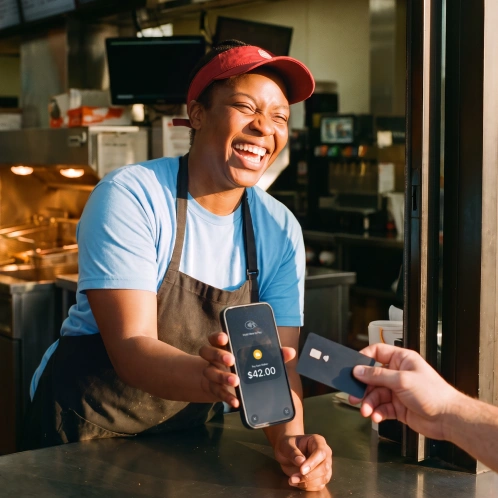
For acai bowl businesses that need to accept payments on-site, JIM offers a streamlined solution. With JIM, you can accept debit, credit, and digital wallets directly through your smartphone at a flat 1.99% per transaction, with no hidden costs and no extra hardware. This setup is useful for keeping your counter clear or for selling at farmers markets, and your money is available on your JIM card right after each sale.
- Get Started: Download the JIM app for iOS.
- Make a Sale: Type the sales amount, hit sell, and ask your customer to tap their card or device on your phone.
- Access Funds: Your money is available right on your JIM card as soon as the sale is done, with no waiting for bank transfers.
Here are 3 immediate steps to take:
- Compare transaction fees from two different payment processors.
- Download the JIM app to explore its interface.
- Decide if you will also accept cash and plan for change and deposits.
Step 6: How do you fund your acai bowl business and manage finances?
SBA 7(a) loans cover up to $5 million for qualified borrowers, and you need six months of working capital on top of your startup costs to stay afloat before you turn a profit.
Explore funding options
The Small Business Administration (SBA) 7(a) loan program is the primary federal business loan program and a strong starting point. You apply through an SBA-approved lender, not the SBA directly, and the SBA guarantees a portion of the loan. The maximum loan amount for a 7(a) loan is $5 million. You might also find success with local credit unions, which often have more flexible terms than large national banks.
Lenders will want to see a strong business plan and creditworthiness. For SBA 7(a) small loans of $350,000 or less, lenders pre-screen applications using the FICO SBSS score, with a current minimum of 165. Many lenders also look for a personal FICO score of 680 or higher, though the exact threshold varies by lender and loan type. For an acai shop, loan amounts often range from $25,000 to $100,000, with interest rates set by the lender within SBA maximums.
Calculate your working capital
A frequent misstep is to focus only on startup costs. You also need enough cash to cover operations for the first six months. This is your working capital, and it keeps the business running before you are profitable.
Plan for at least $40,000 to $80,000 in working capital. This should cover your rent, payroll for a couple of employees, and inventory replenishment. Having this buffer prevents cash flow problems that can shut down a new business quickly.
Here are 4 immediate steps to take:
- Check your credit score to see if you meet typical lender requirements.
- Research the SBA 7(a) loan program on the official SBA website.
- Contact a local credit union about their small business loan options.
- Calculate your estimated operating expenses for the first six months.
Step 7: How do you hire your team and set up operations?
Two to three part-time employees earning $15 to $20 per hour is the right opening team, and your labor cost should stay at 25% to 35% of total revenue.
Build your opening team
You will likely need two to three part-time employees to start. Look for "Team Members" or "Bowl-istas" with experience in food service. Responsibilities include taking orders, preparing bowls, and light cleaning. Expect to pay between $15 and $20 per hour, depending on your location.
Every employee who handles food must have a Food Handler's Permit. This is a non-negotiable requirement from your health department. The process is usually a quick online course, so you can make it part of your onboarding for new hires.
Streamline your daily operations
Staff scheduling is where operators lose money, either through slow service during rushes or high labor costs during quiet periods. You can use scheduling software like Homebase or 7shifts to manage shifts and track hours. These platforms help you build schedules based on sales forecasts.
A good target for your labor cost is 25-35% of your total revenue. This means for every $100 in sales, you should aim to spend no more than $35 on payroll. This ratio helps you stay profitable as you grow and adjust your staffing levels.
Here are 4 immediate steps to take:
- Draft a job description for a "Team Member" role.
- Research scheduling software like Homebase to see if it fits your needs.
- Calculate your target weekly labor budget based on sales projections.
- Create a simple training checklist for new hires covering recipes and cleaning.
Step 8: How do you market your acai bowl business and get customers?
A grand opening promotion, a complete Google Business Profile, and gym partnerships bring in your first 200 customers within the first month.
Create a local buzz
Your first customers will come from your neighborhood. Plan a grand opening event with a special offer, like "buy one, get one free." This creates urgency and encourages people to bring a friend. Local partnerships are an untapped channel for most new shops. Offer a 10% discount to members of nearby gyms.
Master your digital storefront
Claim your Google Business Profile immediately. This is how customers find you when they search "acai bowls near me." For social media, focus on Instagram. Post vibrant, high-quality photos of your bowls. Collaborate with local food micro-influencers, who often have high engagement.
Encourage repeat business
A simple loyalty program works wonders. Start with a physical punch card that offers the 10th bowl free. Build a customer list from day one by placing a sign-up sheet at the counter to collect emails for a weekly newsletter with special offers.
Here are 4 immediate steps to take:
- Plan a grand opening promotion, like a "buy one, get one free" offer.
- Claim and complete your Google Business Profile with photos and hours.
- Contact two local gyms or yoga studios to propose a partnership.
- Design a simple "buy 9, get 1 free" loyalty punch card.
Step 9: How do you develop a pricing strategy for your acai bowls?
Target 25% to 35% food cost per bowl, then use a cost-plus model to set menu prices that cover rent, labor, and overhead while staying competitive with local cafes.
Your menu prices directly control your profitability. A good target for your food cost is 25-35% of your menu price. This means for every dollar in sales, you spend no more than 35 cents on ingredients. This margin covers your rent, labor, and other overhead.
Acai base costs skew higher than other smoothie bowl bases, because wholesale acai is an imported frozen product. Track the per-ounce cost of your acai base separately from fresh fruit and toppings, and revisit the supplier price each quarter.
Calculate your cost per bowl
To price correctly, you must know the exact cost of every bowl. Create a spreadsheet and list every single ingredient, from the acai base to the last coconut flake. Guessing these costs or forgetting small toppings slowly erodes your profit.
For example, if a 40-pound case of acai costs $200, the price per pound is $5. If you use 4 ounces (a quarter-pound) per bowl, your base cost is $1.25. Do this for every item. Once you have the total ingredient cost, you can set a price that hits your margin target.
Set your menu prices
Use a cost-plus model. If your signature bowl costs $3.00 in total ingredients, pricing it at $10.00 gives you a 30% food cost. Look at the competitor menus you gathered in Step 1. If your $10 price is similar, you are in a good spot.
Also, consider a tiered pricing strategy. You can offer a 16-ounce bowl for $10 and a 24-ounce bowl for $13. You can also charge an extra $1.00 or $1.50 for premium toppings like almond butter or goji berries. This is a simple way to increase your average sale.
Here are 4 immediate steps to take:
- Create a spreadsheet to calculate the exact ingredient cost of one signature bowl.
- Set your target food cost percentage, aiming for 25-35%.
- Analyze the menu prices of three local competitors for a comparable bowl.
- Draft initial prices for your core menu and three premium add-ons.
Step 10: How do you maintain quality and scale your acai bowl business?
Standardized recipe cards keep every bowl consistent, and your weekly food cost percentage is the number that tells you when to hire or open a second location.
Keep your product consistent
Your reputation depends on every bowl tasting as good as the last. Inconsistent portions hurt both your food cost and the customer experience. Create standardized recipe cards for every menu item.
Use a 4-ounce scoop for the acai base and specific measuring spoons for toppings. This ensures a customer who visits on Monday gets the exact same bowl as someone who comes on Friday. This simple discipline is what builds a loyal following.
Track your performance
Monitor your customer feedback daily. You should aim to keep your average rating above 4.5 stars on platforms like Google and Yelp. Make it a policy to respond to all reviews within 24 hours. This shows you are engaged and value customer opinions.
In addition, you need to watch your internal numbers. Calculate your food cost percentage weekly. If it climbs above your 35% target, it is a clear signal that you have an issue with portioning, waste, or supplier pricing that needs immediate attention.
Plan your growth
Add a new part-time employee when you consistently sell more than 70 bowls per day, which keeps service times low during rushes. When your shop regularly sells over 200 bowls a day and you are at full capacity, it is time to consider a second location. Use your scheduling software, like 7shifts or Homebase, to analyze sales data to identify your busiest hours and justify growth decisions.
Here are 4 immediate steps to take:
- Create a standardized recipe card for your most popular bowl.
- Check your current average star rating on your Google Business Profile.
- Calculate your food cost percentage from last week's sales and inventory.
- Determine your average number of bowls sold per day over the last month.
Ready to launch if you have a signed lease, an approved health permit, six months of working capital, and a payment processor picked out. As you serve your first customers, keep your checkout simple. A solution like JIM lets you accept card payments directly on your smartphone, with no extra hardware and a flat 1.99% fee. Download JIM to get started.
Frequently Asked Questions
Is an acai bowl business profitable?
How much does it cost to start an acai bowl business?
What permits do I need to open an acai bowl shop?
Do I need an LLC for an acai bowl business?
How do I accept card payments at my acai bowl shop?


Sell and get paid in seconds with Jim